Polymer Systems
Technology Limited


S300X

 LIQ21 | LIQ11
IDEX SILICONE 3D PRINTER

Lynxter introduces the S300X – LIQ21 | LIQ11, an industrial silicone 3D printer that redefines the realm of possibilities. Explore a compact machine, unparalleled reliability, and unprecedented robustness while benefiting from integrated support printing technology for unlimited design potential in medical and industrial silicones as well as polyurethanes.
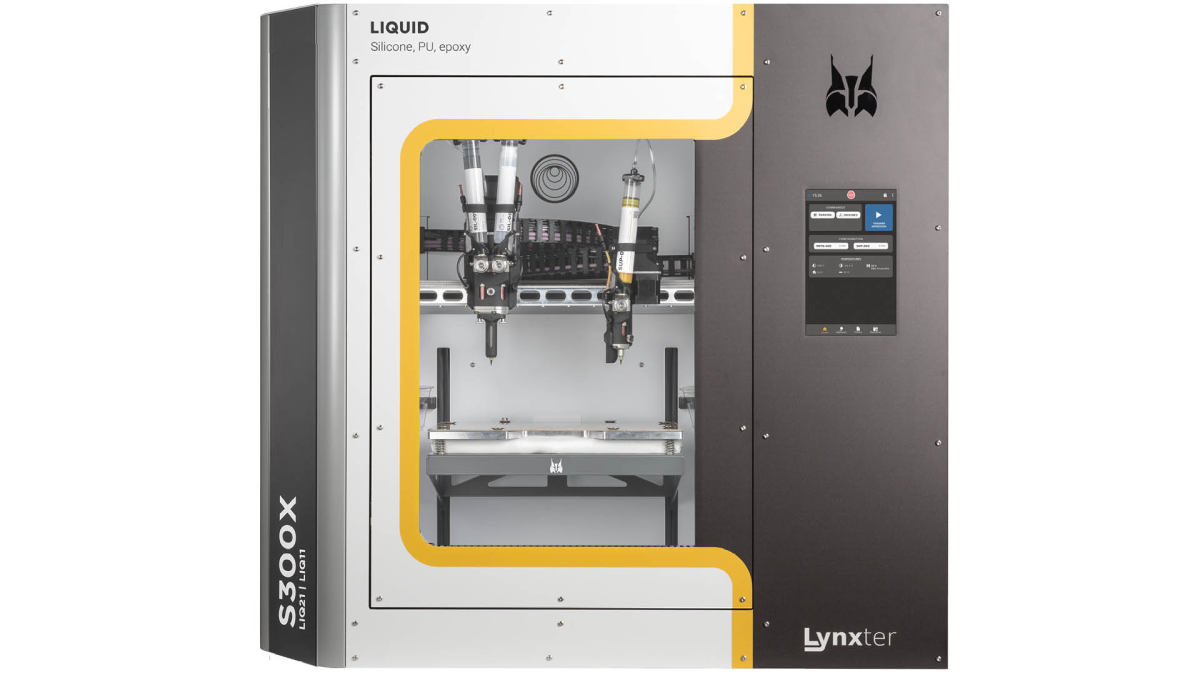
3D-Silicone-Idex-S300X-Lynxter
LEADING THE WAY IN SILICONE 3D PRINTING SINCE DAY ONE

Lynxter didn’t follow the trend, we started it.
Where others saw limits, we built the machine.

Today Lynxter is at the forefront of silicone 3D printing innovation.

We introduces a new industrial 3D printer, the S300X, the most efficient on the market today to print medical and industrial grade silicones and polyurethanes. A compact, reliable and robust industrial silicone 3D printer with integrated support printing technology for unlimited shape design.


SILICONE 3D PRINTING, DEMOCRATISED, FREE-FORM, INDUSTRIAL AND MEDICAL GRADE


ENHANCE YOUR DESIGNS WITH IDEX SILICONE PRINTING

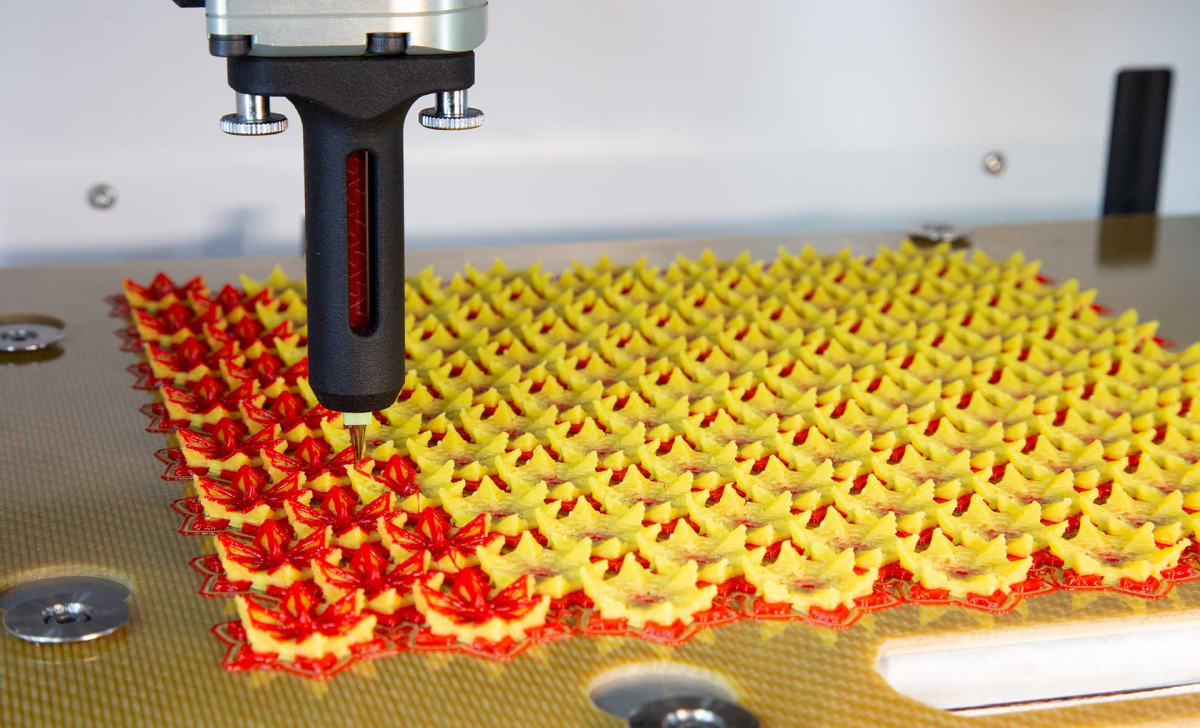
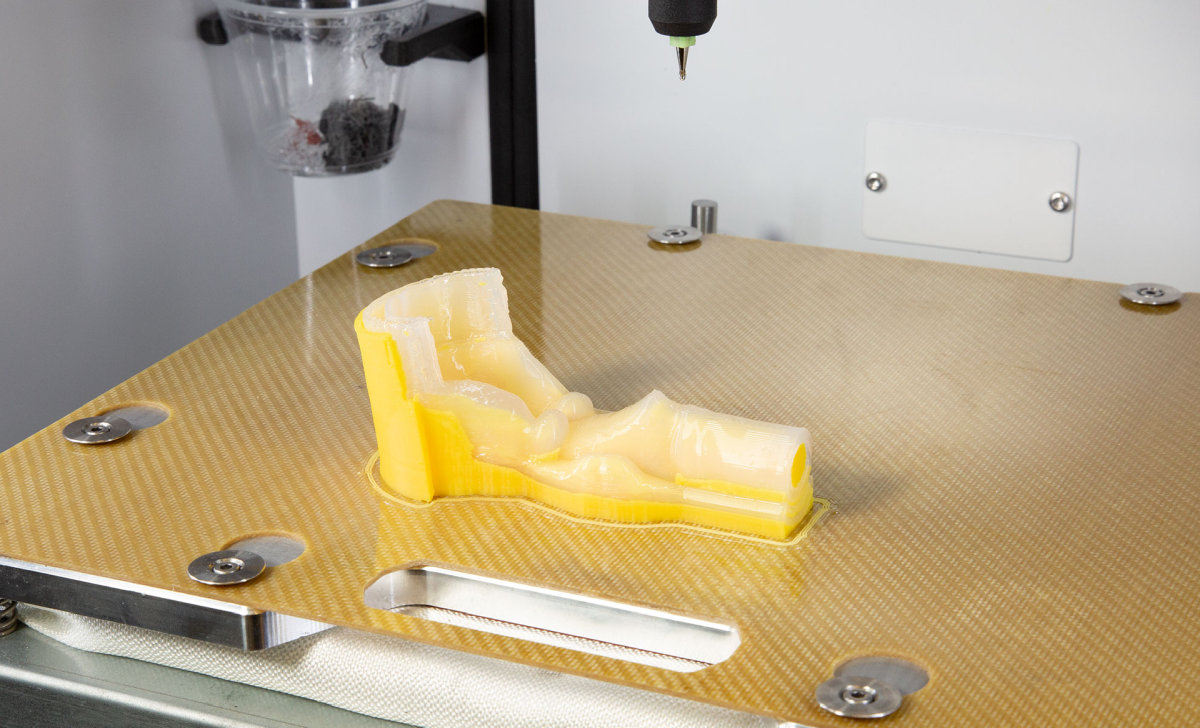
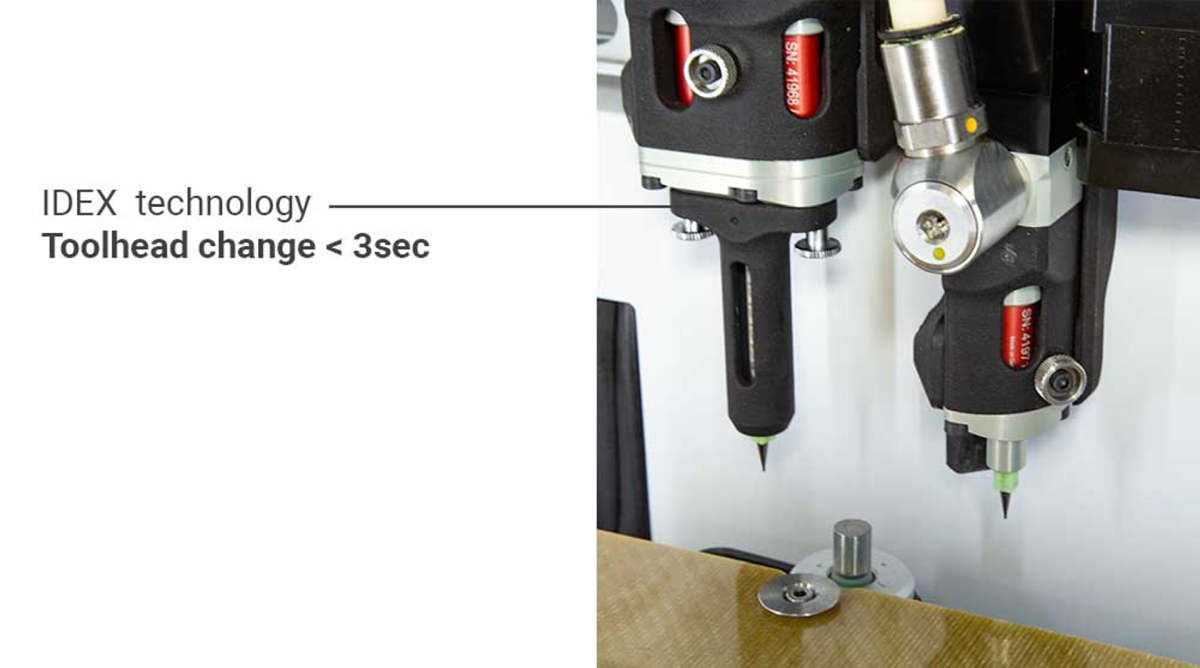
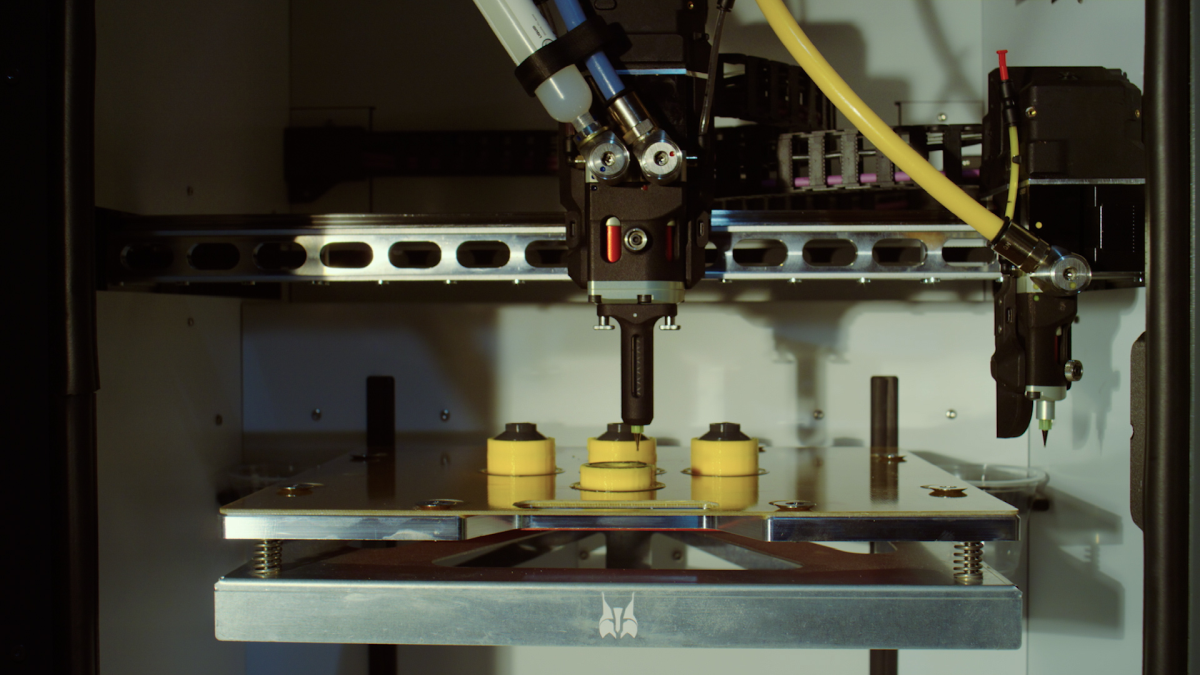
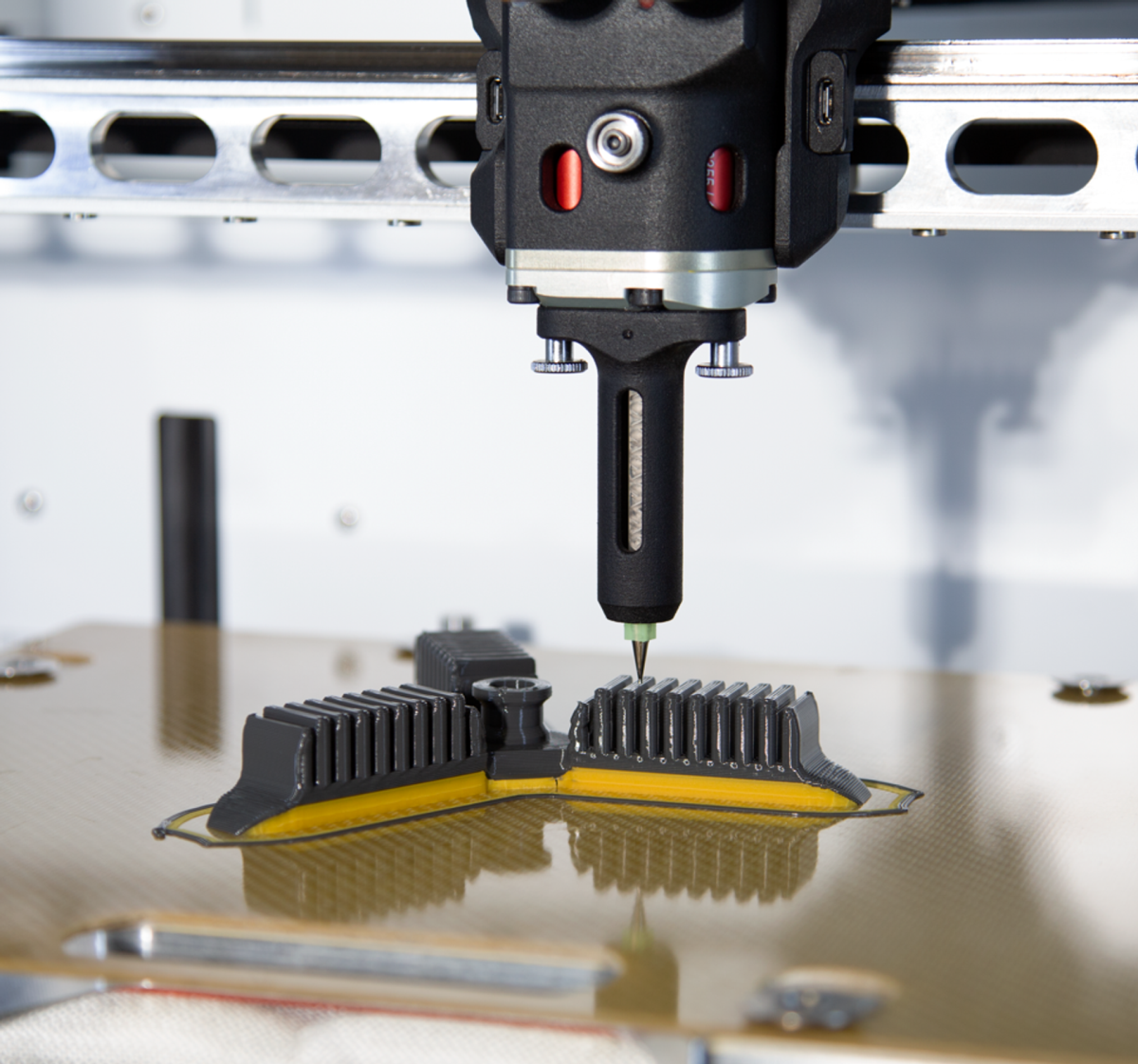
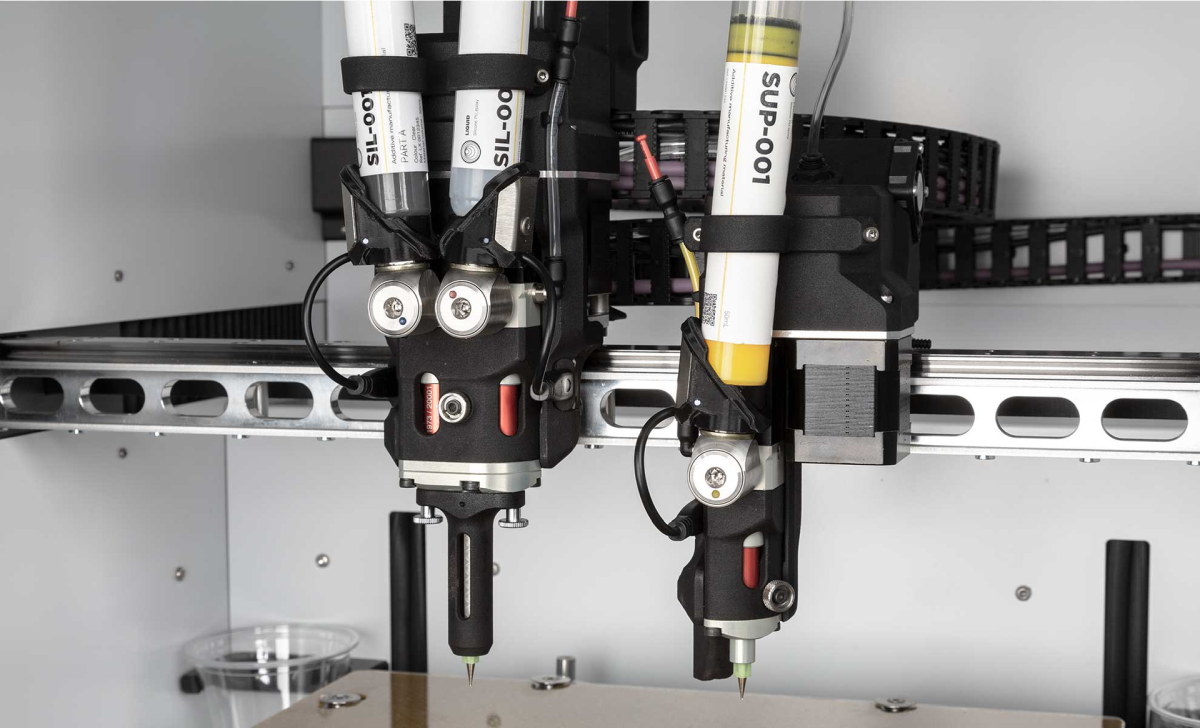
The S300X – LIQ21 | LIQ11 silicone 3D printer is equipped with two toolheads configured in Independent Dual Extrusion (IDEX): the LIQ21 two-part for creating the main part and the LIQ11 single-component for water-soluble support structures.


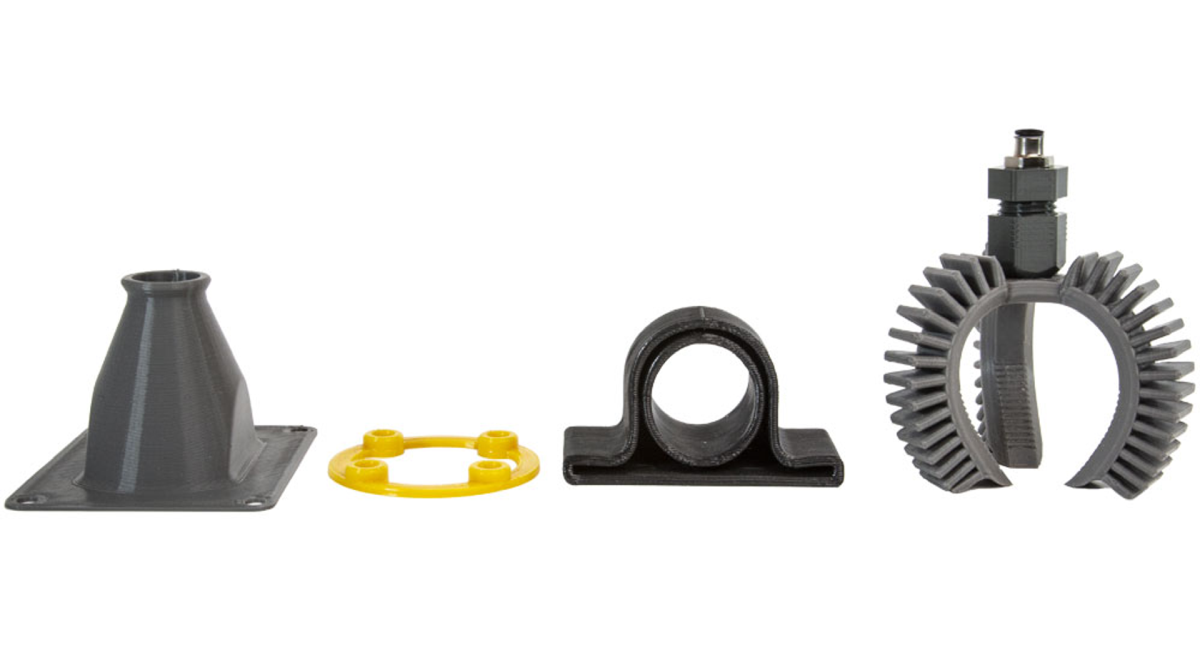
Unlimited design freedom thanks to soluble support. Multi-material printing without cross-contamination. Customisable extrusion : single or double.

Close-Up-3D-Silicone-Idex-S300X-Lynxter
THE FUTURE OF INDUSTRY

The S300X – LIQ21 | LIQ11 silicone 3D printer is designed to meet the needs of the industry. It’s used for the production of surface treatment masks and caps, custom seal printing, emergency repairs, or soft robotics. Production gains in efficiency, responsiveness, production lead time, and innovation.


The S300X – LIQ21 | LIQ11 silicone 3D printer can print industrial-grade RTV2 silicone (45 and 70 ShA) and polyurethane (ranging from 50 to 85 ShA).

CHANGING HEALTHCARE

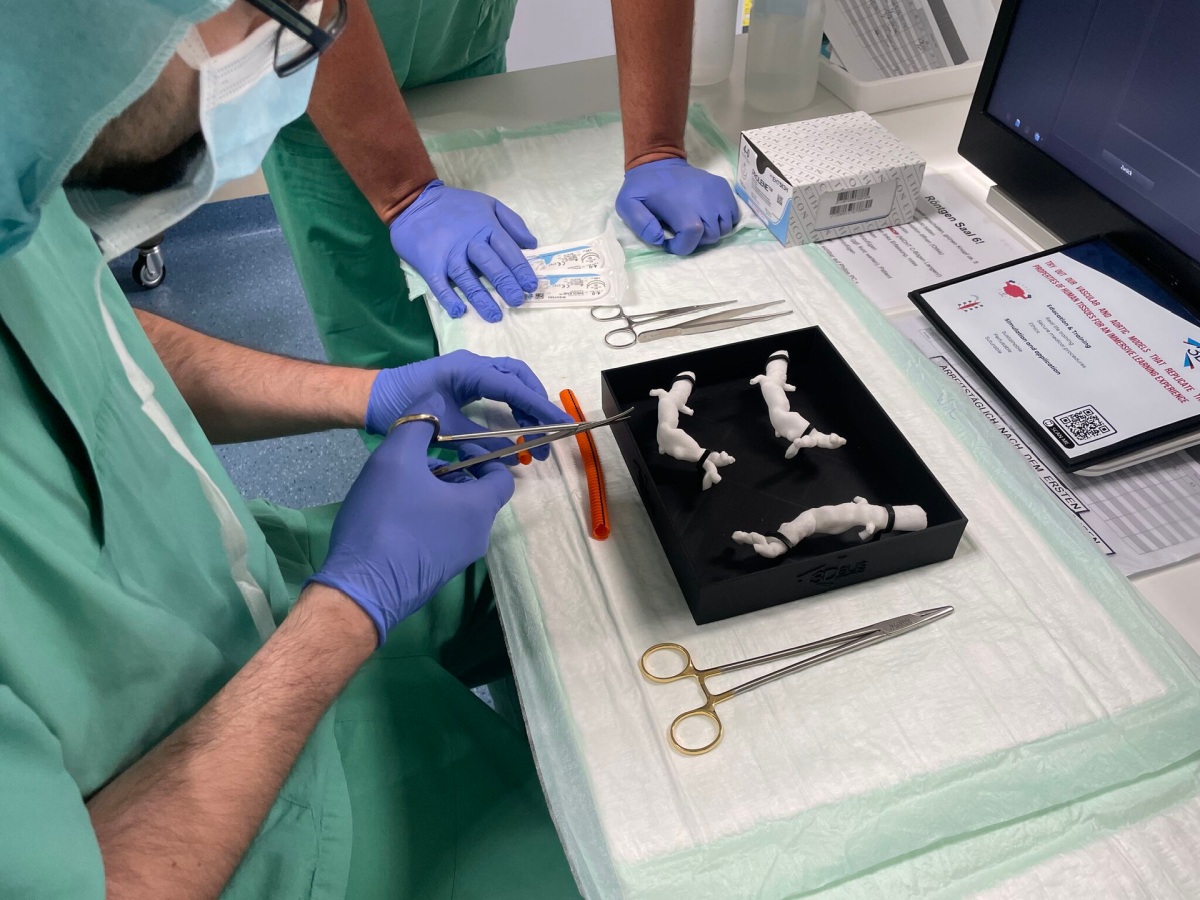
Silicone 3D printing contributes today to the improvement and simplification of the medical workflow by reducing the number of manual interventions involved in the production of ortheses and prostheses. It is also used to make custom and realistic medical training devices.


The S300X – LIQ21 | LIQ11 silicone 3D printer can print RTV2 silicones certified skin contact from 5 ShA to 40 ShA (45 Sh00 to 86 Sh00).

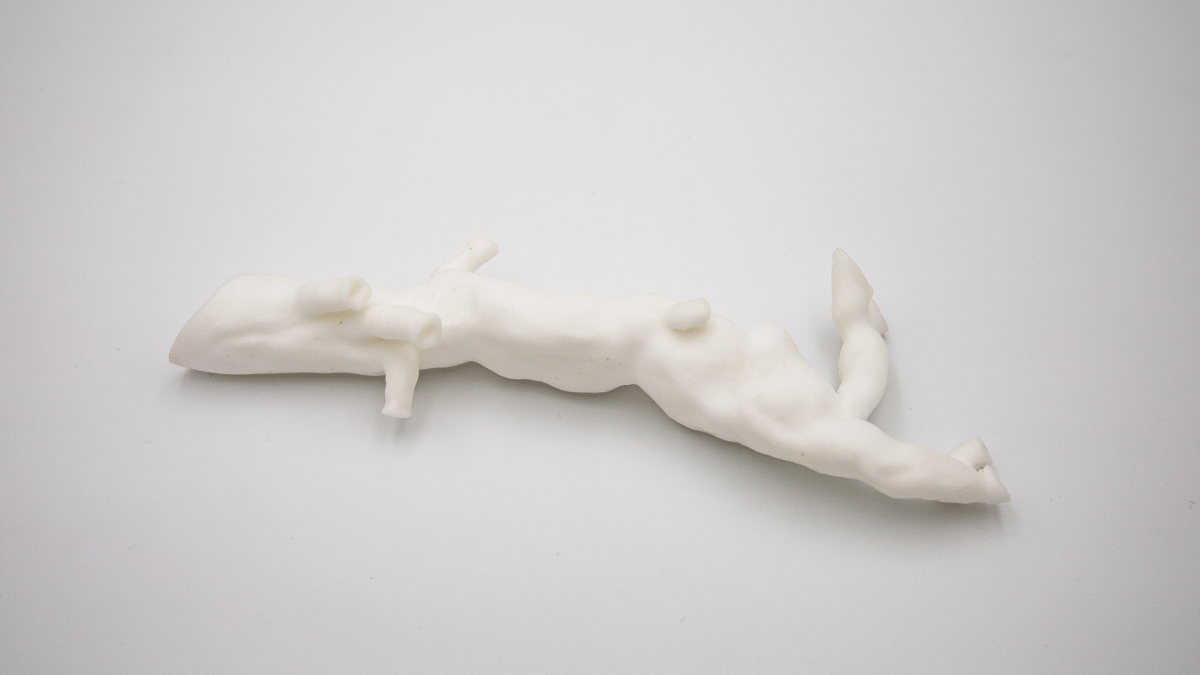
3d Printed Aorta


Silicone 3D Printing Across Different Industries


DEFENSE
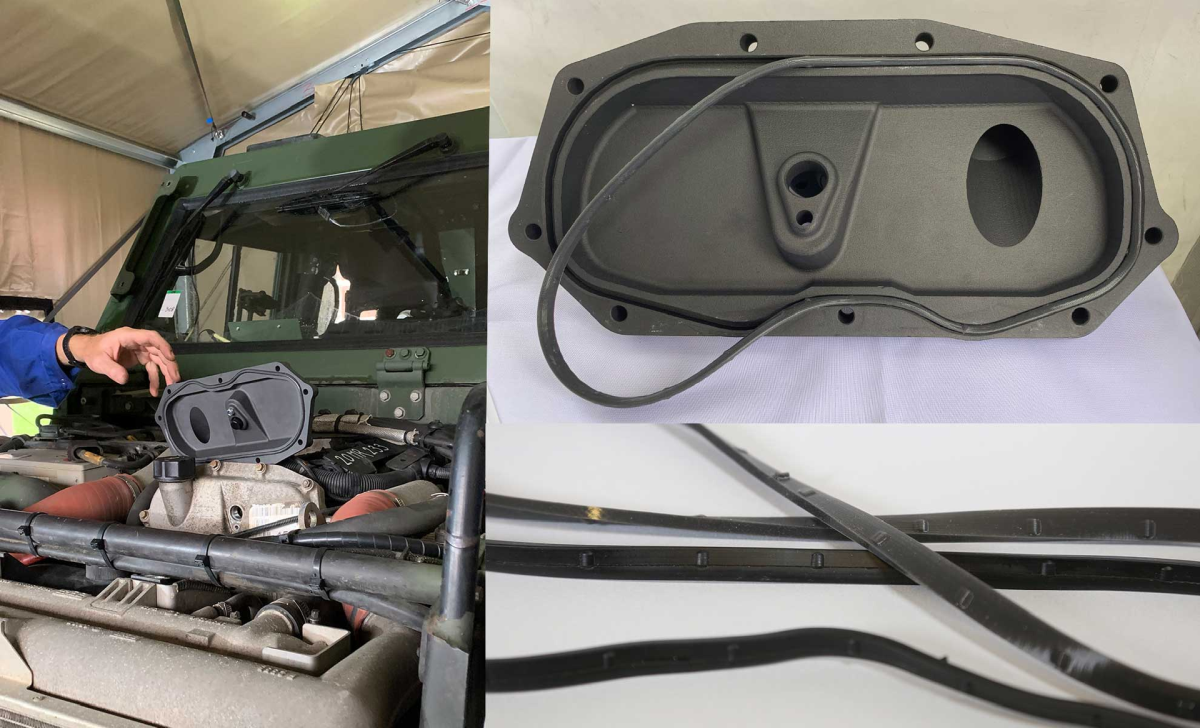
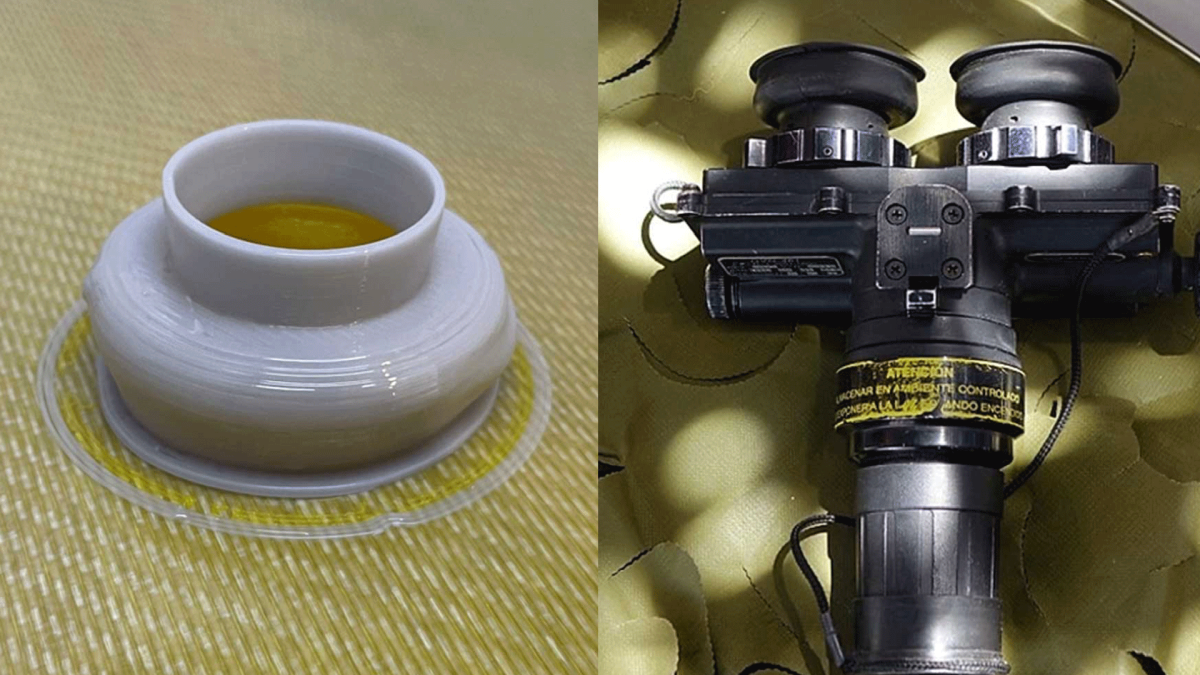
As modern militaries face increasingly complex operational and logistical challenges, 3D printing—particularly with functional elastomers like silicone and polyurethane—is emerging as a game-changing technology. From emergency repairs to small-scale, high-performance production, silicone 3D printing is reshaping the way armed forces maintain equipment, develop components, and tackle obsolescence.
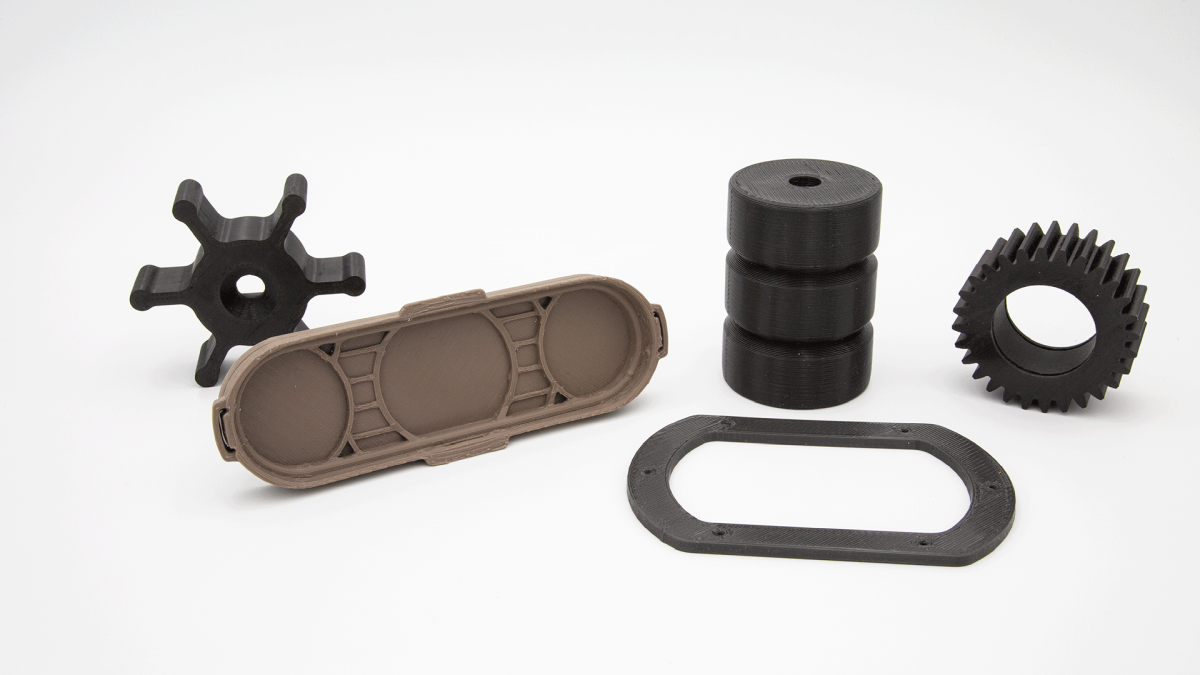
Silent block 3d printed
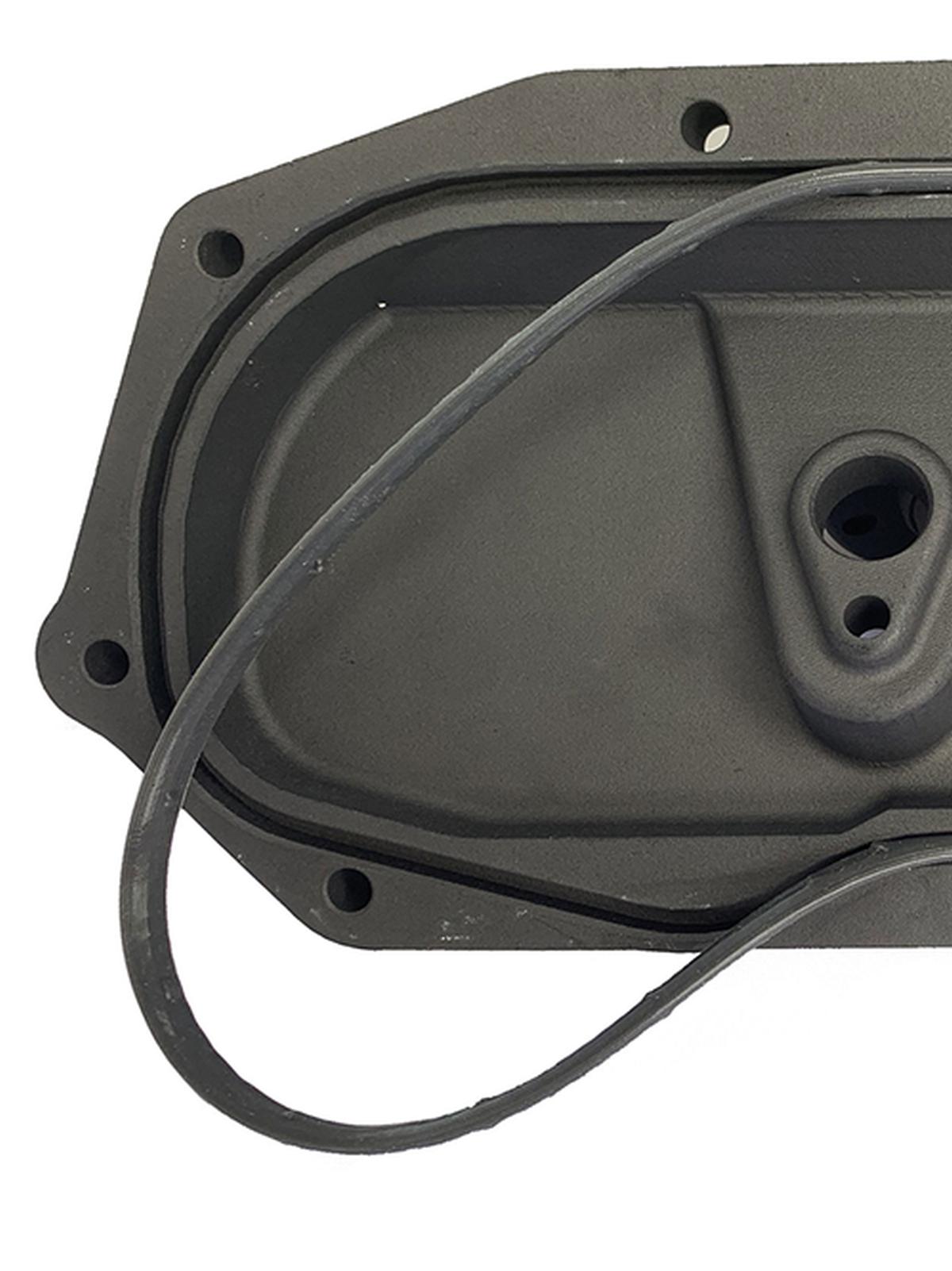
Gasket 3d printed
Gasket 3d printed
SILICONE 3D PRINTING IN MILITARY MAINTENANCE

Silicone and PU 3D printing plays a vital role in Maintenance, Repair, and Operations (MRO) and In-Service Support (ISS), the operational readiness and maintenance of defense equipment. With Lynxter’s 3D printers, military units can quickly produce spare parts on-site, dramatically reducing downtime and supply chain reliance.

Key advantages
  • Faster repair cycles in remote or combat zones.
  • On-demand part production without tooling or minimum order requirements.
  • Support for complex geometries and flexible parts (joints, seals, gaskets).
  • Temperature and chemical resistance (from -50 °C to +250 °C).
  • 3D PRINTING FOR DAMAGE REPAIR AND RAPID RESPONSE

    Multimaterial 3D printing enhances agility during missions, especially for ER (Emergency Repair) and BDR (Battle Damage Repair) scenarios. On the field, troops can:

  • Quickly fabricate replacement parts, tools, and fixtures.
  • Reduce dependency on external suppliers or long logistics chains.
  • Ensure continuous operational readiness during high-stress situations.

  • Lynxter's technology provides strategic independence and mission-tailored customisation, both essential in modern warfare.

    OVERCOMING OBSOLESCENCE WITH REVERSE ENGINEERING

    One of the biggest challenges in defense is the obsolescence of components. With silicone 3D printing:

  • Outdated parts can be reverse-engineered and reproduced from damaged or archived samples.
  • Custom improvements can be made to enhance durability or performance.
  • Spare parts can be printed below minimum production thresholds, which is impractical for traditional manufacturers.

  • This extends the lifespan of legacy systems and minimises long-term maintenance costs.

    Gasket 3d printed


    DESIGN & FASHION
    Explore limitless textile design with 3D silicone printing, whether printing directly onto fabric or transforming silicone into a textile itself, unleash bold textures, vibrant colours, and creative freedom like never before.
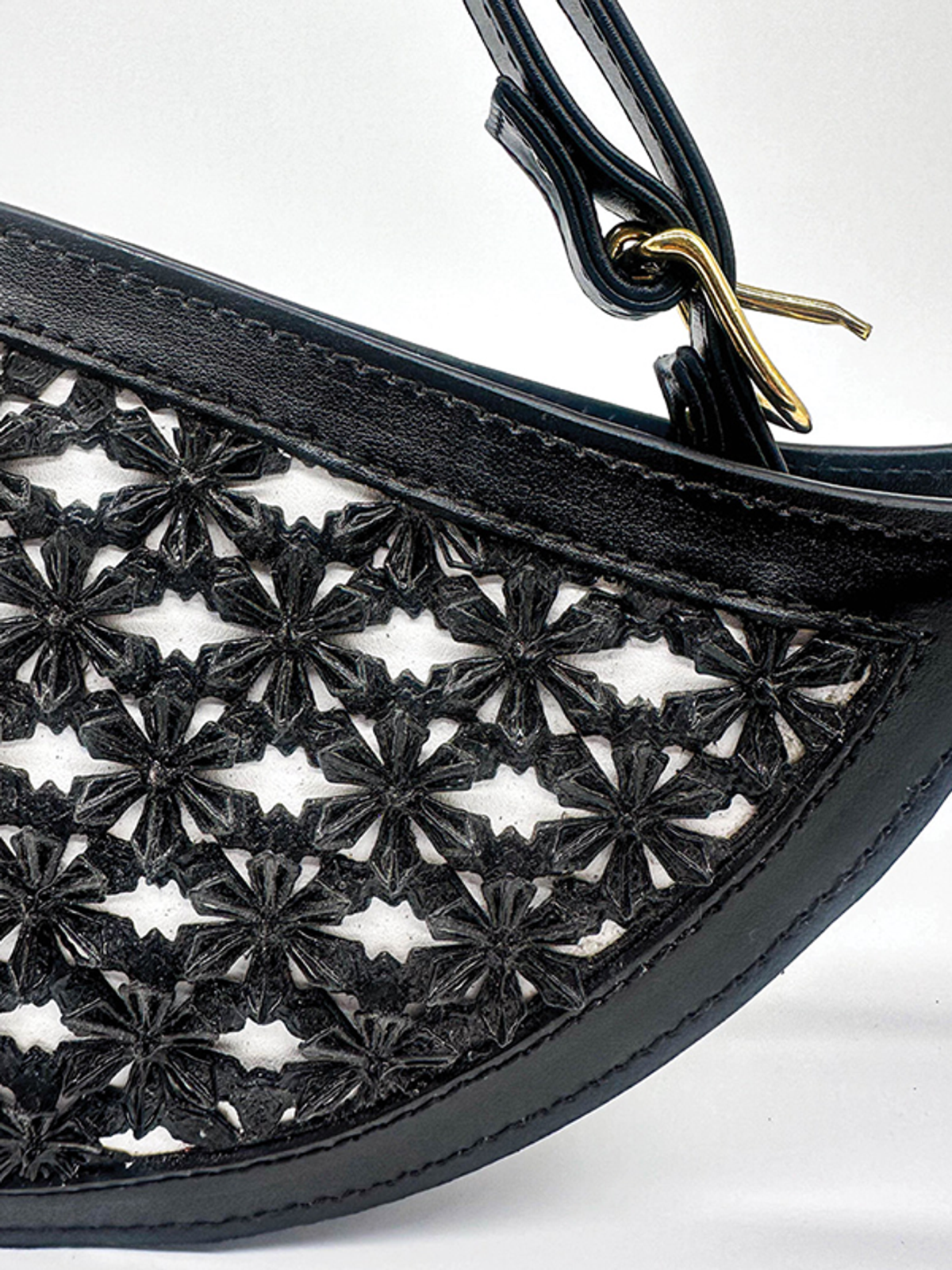
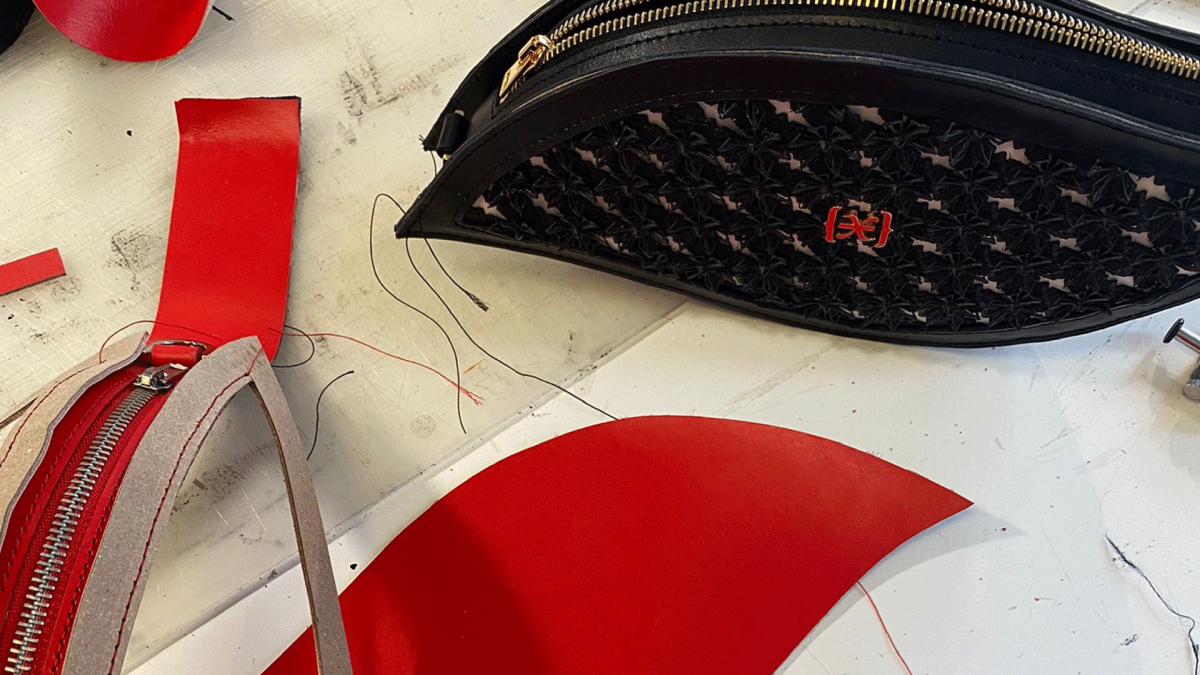
    3d printed material and bag
    UNLEASH CREATIVE FREEDOM

    Silicone 3D printing lets designers break free from traditional limits, print directly on fabric or turn silicone into textile. Create bold textures, vibrant colours, and unique patterns on-demand. Designers can sculpt dramatic, lace-like structures on couture gowns, layer fluid, organic patterns over sheer fabrics, create statement accessories, embellish avant-garde outerwear with sculptural elements that transform a simple garment into a runway masterpiece.

    SPEED UP FASHION INNOVATION

    Go from idea to prototype fast.
    With the S300X ‑ LIQ21 & LIQ11, print complex, ready-to-use pieces in hours, perfect for custom designs, limited runs, and rapid experimentation. Silicone 3d printing enables the production of non-slip grip zones on sportswear, integrated cushioning systems in custom-fit footwear, durable and waterproof panels in jackets, flexible yet impact-resistant accessories that enhance comfort and functionality.

    DESIGN WITH PURPOSE

    Reduce waste and produce only what you need. With silicone 3D printing, you can create designs on-demand, eliminating overproduction and excess inventory. Customise or upcycle garments sustainably by adding new patterns, textures, and details directly onto existing pieces, extending their lifespan. Using skin-safe, eco-friendly silicone ensures that every creation aligns with conscious fashion values.


    SILICONE 3D PRINTING ON TEXTILES: LIMITLESS DESIGN
    Silicone 3D printing on textiles is an innovation allowing designers to create unique and complex pieces. Customisation, texture diversity, and durability are its strengths. Lynxter collaborates with designers to shape the fashion and design of tomorrow.
    IMAGINE, CREATE, PRINT!

    Lynxter Silicone 3D technology gives the material a mysterious delicacy as well as surprising robustness: a major innovation for the design industry.

    Of course, we think of luggage, fashion (both haute couture and ready-to-wear) but not only that… we also envision applications in the automotive or aerospace industries with personalised seats or those with better vibration absorption. In the medical field, we already imagine the bandages of tomorrow, in sports we improve accessories (silicone reinforcements on knee pads to improve durability and comfort, for example). Let’s not forget the film and entertainment industry with incredible prospects for creating unique sets and never-before-seen props.

    There are numerous applications for printing on textiles, and the possibilities are limitless. Especially with our S300X ‑ LIQ21 & LIQ11 machine, silicone printing allows for two applications:

  • The machine directly prints silicone onto an existing textile piece.
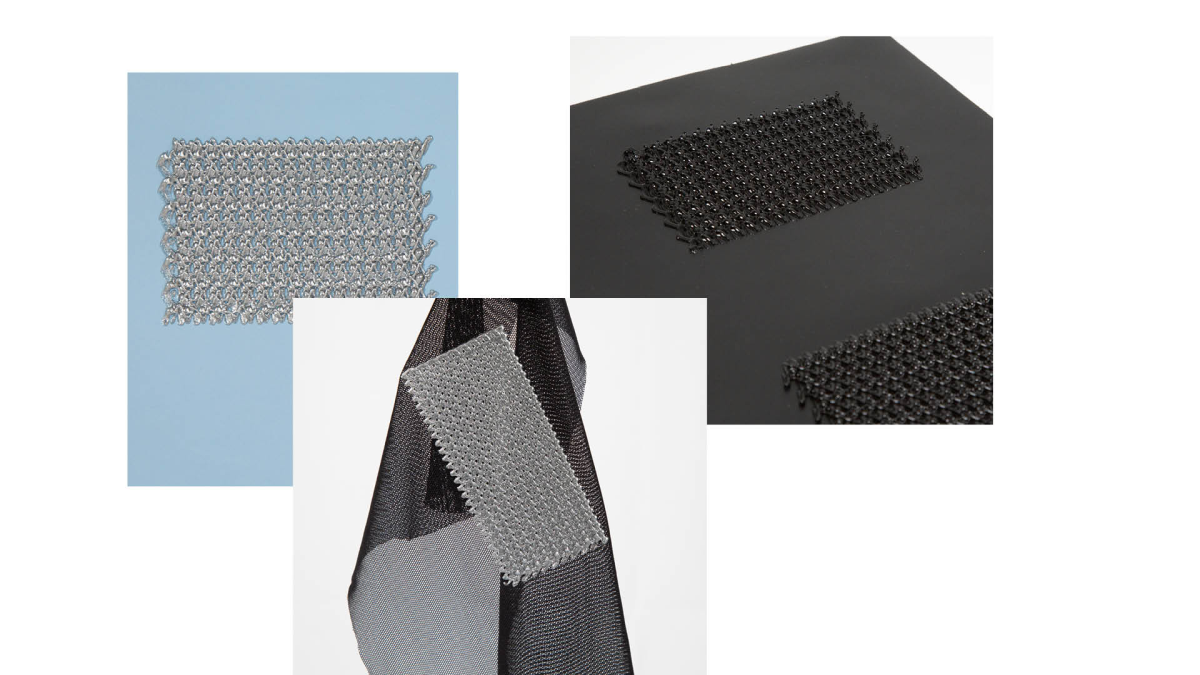
  • The silicone itself becomes a “textile” material.
    Textures, patterns, fabrics, electric colours, straw yellow or petrol blue, multi-coloured glitter integrated into silicone—the possibilities are endless, limited only by your imagination.

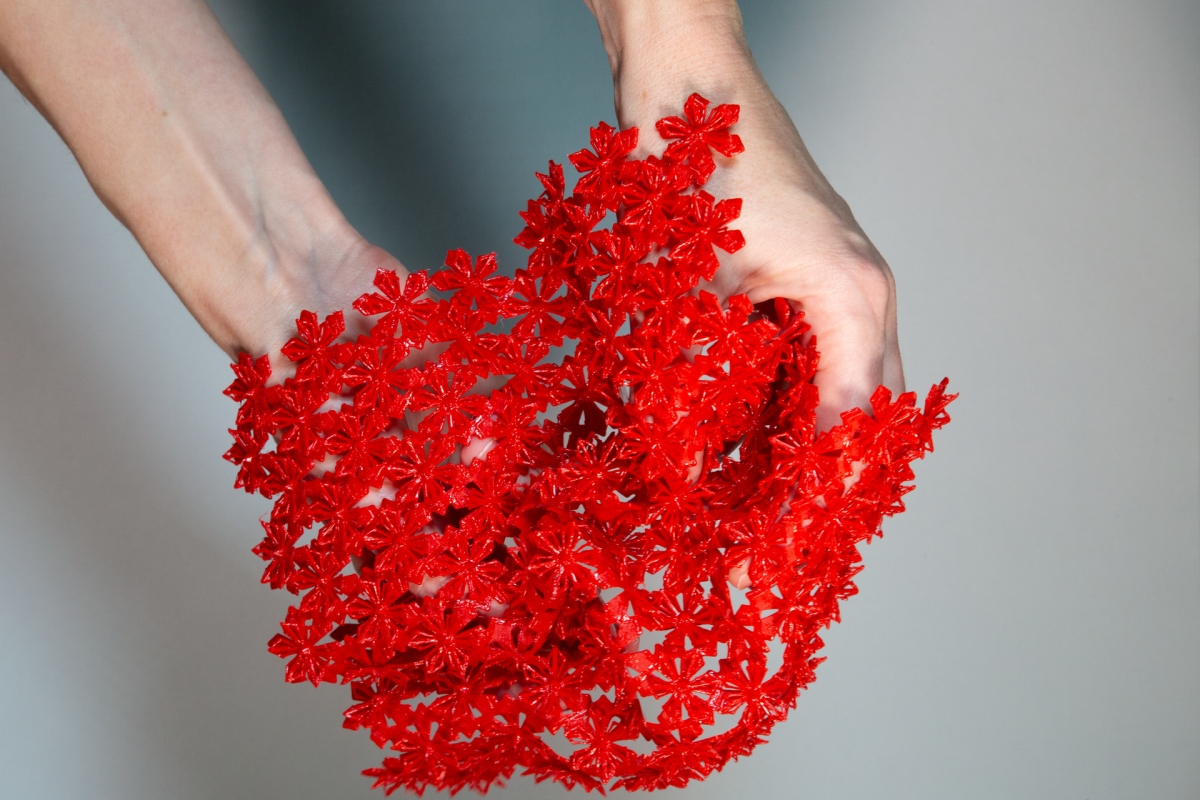
  • Red Silicone Fabric
    Silicone Fabric with backing material
    Red Silicone Fabric printed with support material


    SOFT ROBOTICS & ELECTRONICS
    3D PRINTING APPLICATIONS
    Discover how silicone 3D printing enhances soft robotics by creating flexible, adaptive robotic components. Explore real-world use cases and research applications.

    WHAT IS SOFT ROBOTICS?

    Reduce waste and produce only what you need. With silicone 3D printing, you can create designs on-demand, eliminating overproduction and excess inventory. Customise or upcycle garments sustainably by adding new patterns, textures, and details directly onto existing pieces, extending their lifespan. Using skin-safe, eco-friendly silicone ensures that every creation aligns with conscious fashion values.

    SILICONE: THE IDEAL MATERIAL FOR SOFT ROBOTICS

    Soft robotics is a technology that concerns the creation of robots that are almost entirely “soft”: their articulations and their movements are flexible thanks to the use of soft, elastic, bendable or easily deformable structures and materials.
    That’s great, but how did we get here? The field of soft robotics is the natural evolution of robotics. It appeared with the development of technical silicones and innovative processes such as the 3D printing revolution. These solutions now make it possible to significantly broaden the variety of robotic motions by integrating mechanical movements of compression, stretching, unwinding and swelling. Robots therefore possess more flexible and softer motion mechanics; some robots can, for example, reproduce the undulating and twisting movement of tentacles.
    Object manipulation is more precise and controlled, soft robots drastically minimise risks of danger and damage to the surrounding environment during intervention. This solution is perfectly suited to interaction with unstable or uncertain environments as well as for handling fragile objects in the food, space or medical robotics sectors, for example:
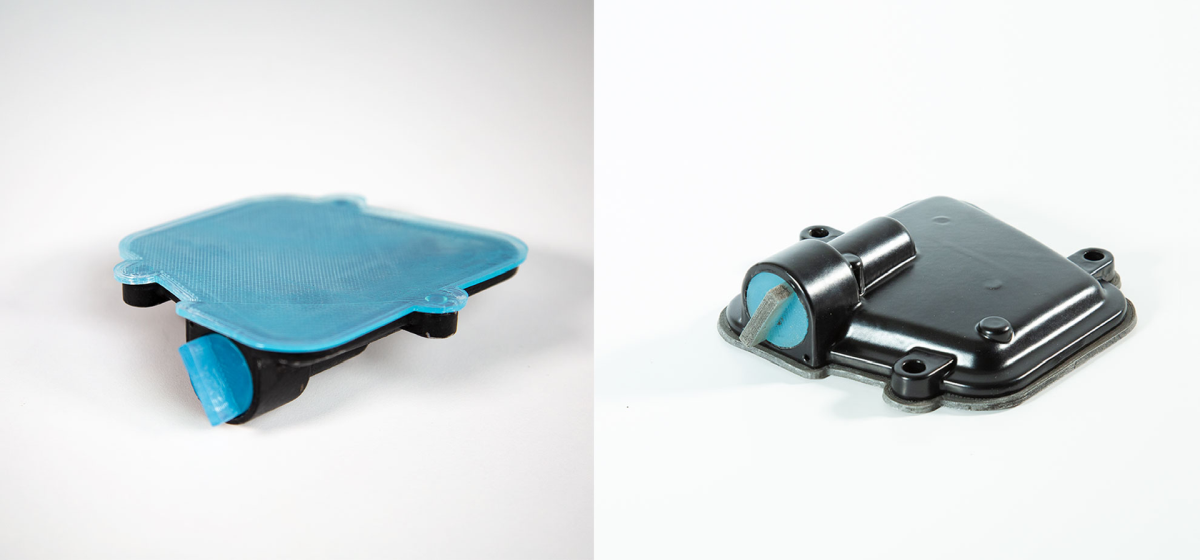
    The part in question is a boot seal for a brake system – used to protect the system from water, dust, oil and ballast. It is not a very exposed part and needs to be made of a really flexible material: silicone is therefore ideal. Silicone additive manufacturing appears to be an ideal alternative to address this one-off and urgent need. How then to move from a molded part to a printed part?

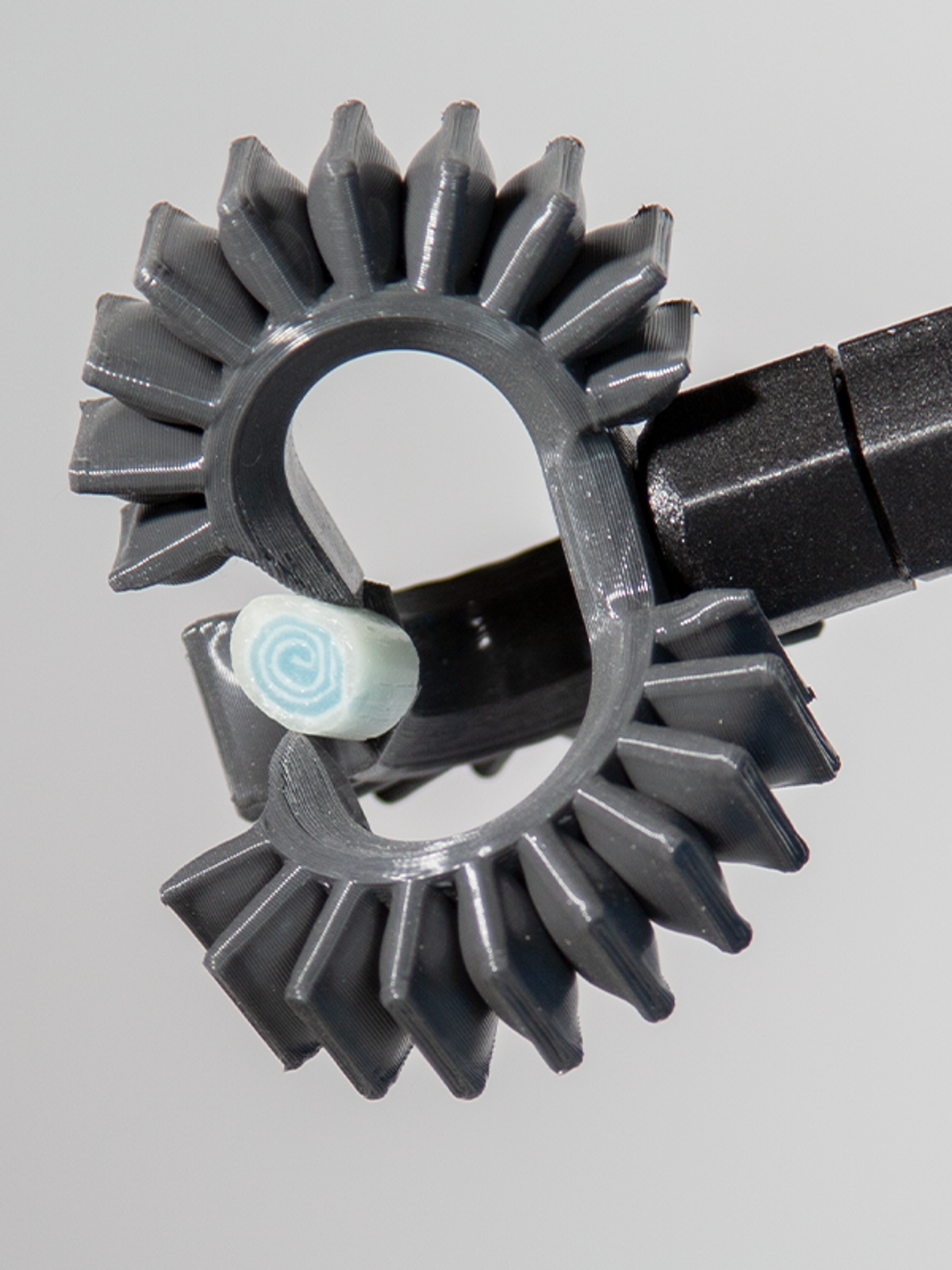
    CUSTOMISED SILICONE 3D PRINTED GRIPPERS

    A key advantage of this partnership lies in the customisation of grippers. Lynxter’s expertise in silicone 3D printing allows for tailor-made solutions that meet the specific needs of Niryo’s clients. Whether for R&D projects, handling delicate components, food products, or industrial parts, the grippers can be adjusted in shape, texture, rigidity, colour, and size.

    This innovative approach enables rapid and easy integration onto robots, offering a true plug-and-play experience that minimises setup time and costs. Traditional methods require extensive resources to design silicone parts for robotics, including mold creation and material casting. Moreover, conventional molding techniques struggle to accommodate the intricate designs of grippers, which often feature internal channels, cavities, and flexible deformation angles. Only liquid IDEX 3D printing can achieve such complexity with efficiency.


    HEALTHCARE
    USING 3D PRINTING FOR MEDICAL PURPOSE
    Explore the impact of 3D printing in healthcare, enabling patient-specific solutions, advanced surgical planning, and on-demand production of medical components.
    ERGONOMIC & MEDICAL DEVICES

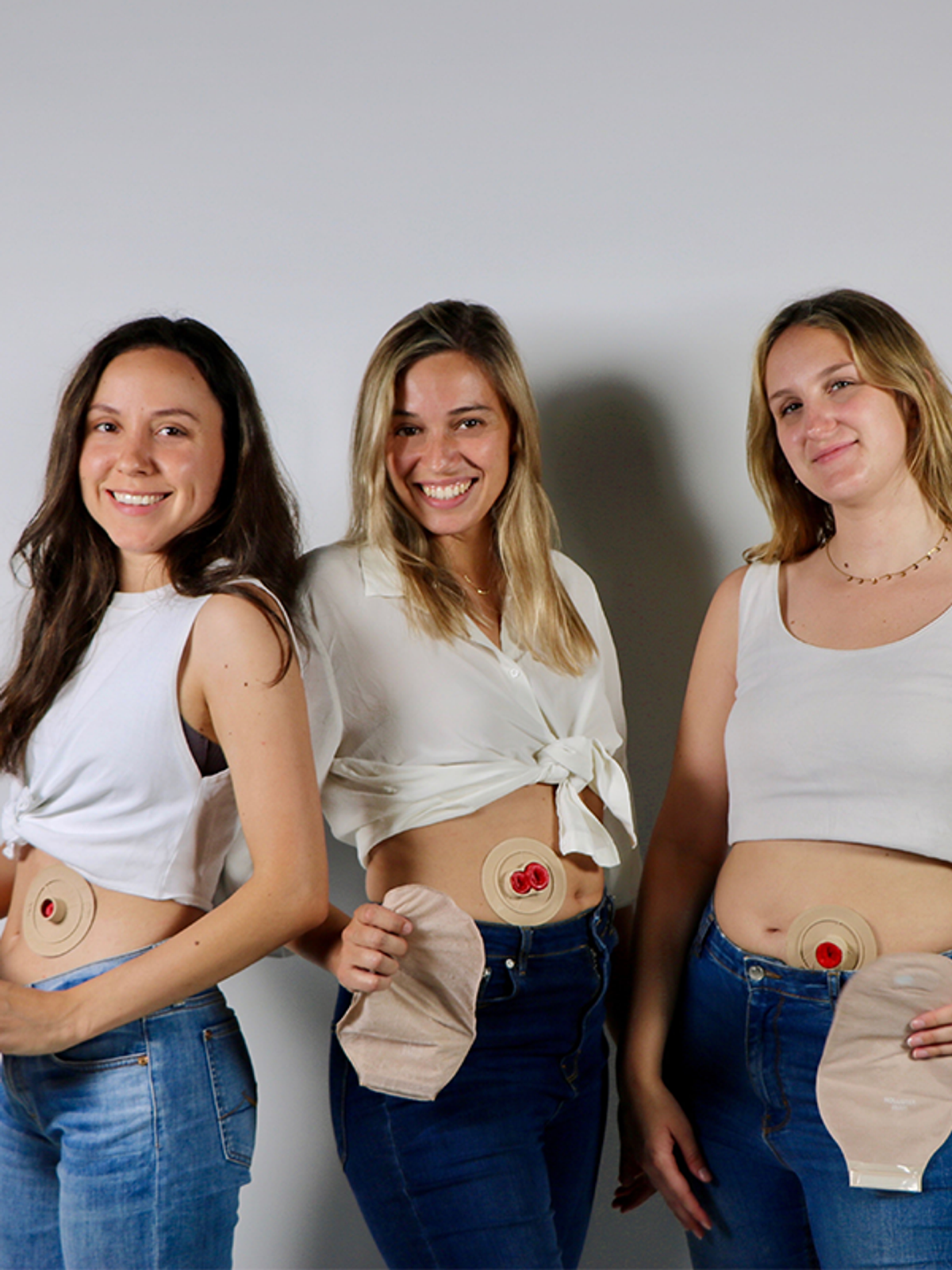
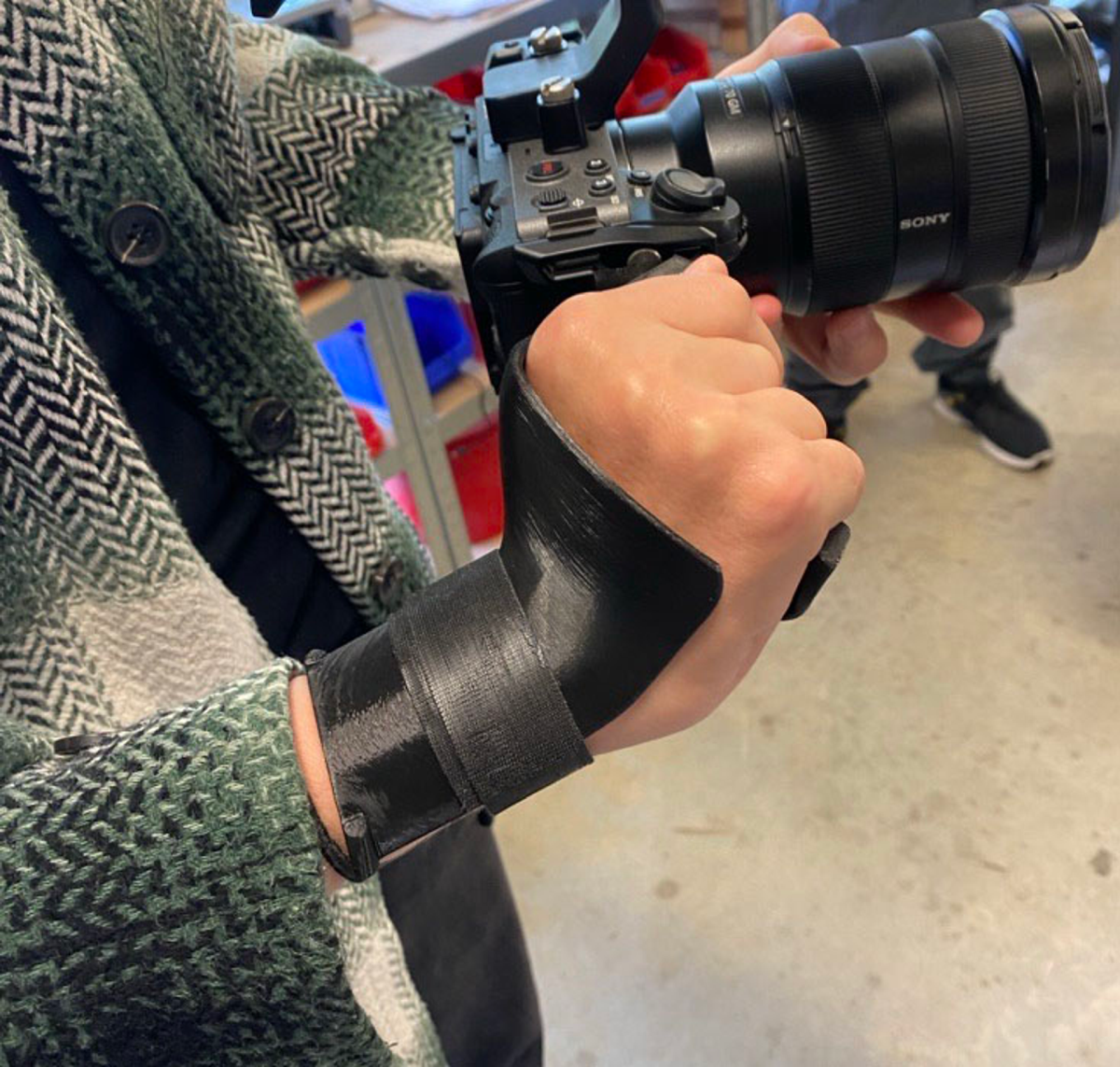
    Thanks to its flexibility with materials, Lynxter supports the rapid design and print cycles needed to create ergonomic devices—like personalised camera grips for users with disabilities or silicone orthopedic collars. This allows fast iteration and customisation to user anatomy, noticeably improving comfort and usability.

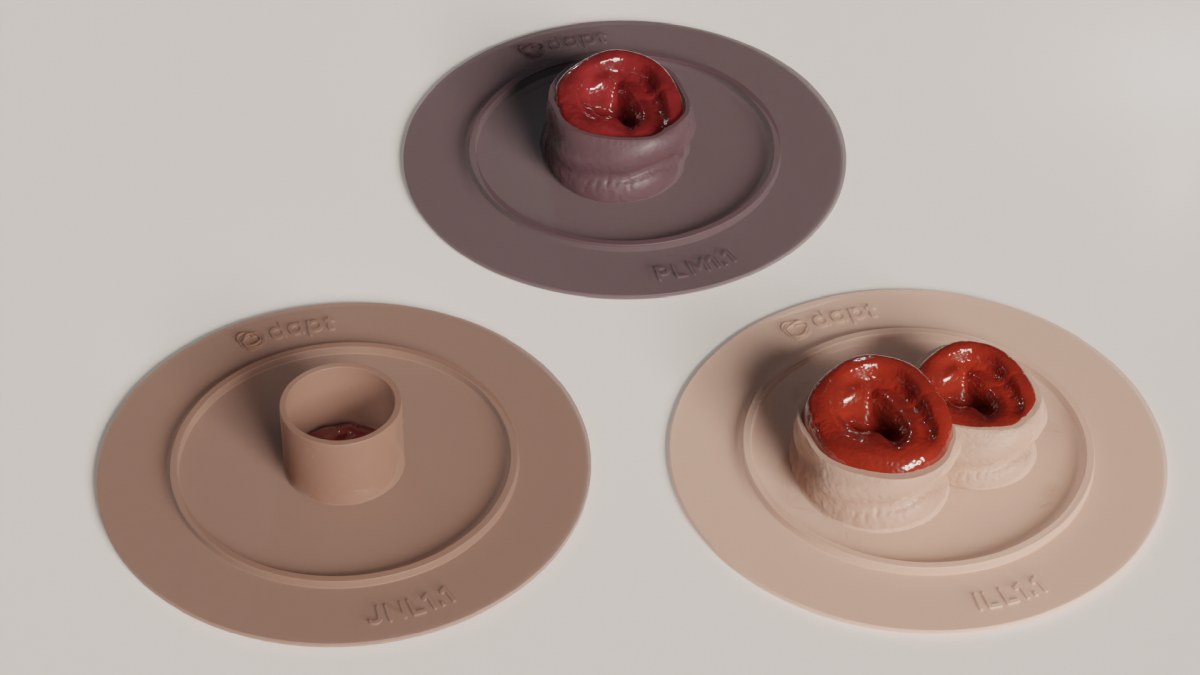
    Renders of Odapt showing three customised wafers
    Pharyngolarynx printed by the S300X
    3D printed aorta in silicone
    3D PRINTED HANDLE


    SURFACE TREATMENT
    3D PRINTING APPLICATIONS
    Explore how silicone 3D printing is transforming the masking process in surface treatment and coating application with real life case studies.
    SURFACE TREATMENT: PLASMA SPRAYING

    Plasma spraying is a surface treatment process providing a solution to deposit a coating on all or specific areas of a part. The deposited coating brings new functionalities to the surface and improves its physical, chemical or tribological properties.

    This technique is based on the creation of an electric arc in a mixture of “plasma gas”. The plasma, whose temperature can reach 16,000°C, is used to melt a powder stream as it passes through the torch.

    Different plasma gases are used such as argon, helium, nitrogen, or hydrogen. The gas mixture and the projection conditions can be adjusted to modify the thermal properties of the plasma as well as the speed of the particles.

    The powder flow used depends on the material to be deposited. It can be metals, metal alloys, carbides, oxides, … whose composition and particle size are finely controlled. This one is propelled by a carrier gas in order to be injected in the plasma gas mixture.

    Plasma spraying is carried out under atmospheric pressure and is used to reinforce parts intended to be used in extreme conditions.

    SILICONE 3D PRINTED MASKS FOR WET SURFACE TREATMENT

    Faster lead time: Silicone 3D printing enables the creation of masks tailored to specific applications, ensuring optimal performance in various geometries and treatment scenarios.

    Improved compliance indicators: The flexibility of silicone 3D printed masks ensures superior sealing, preventing leaks and optimizing the efficacy of wet surface treatment.

    Improved staff workflow: Silicone masks are easily removed, cleaned, and disinfected, saving time, promoting hygiene and suitability for repeated use.

    Gain in flexibility: Silicone’s resistance to various chemicals enhances the durability of the mask, making it apt for a diverse range of wet surface treatments.

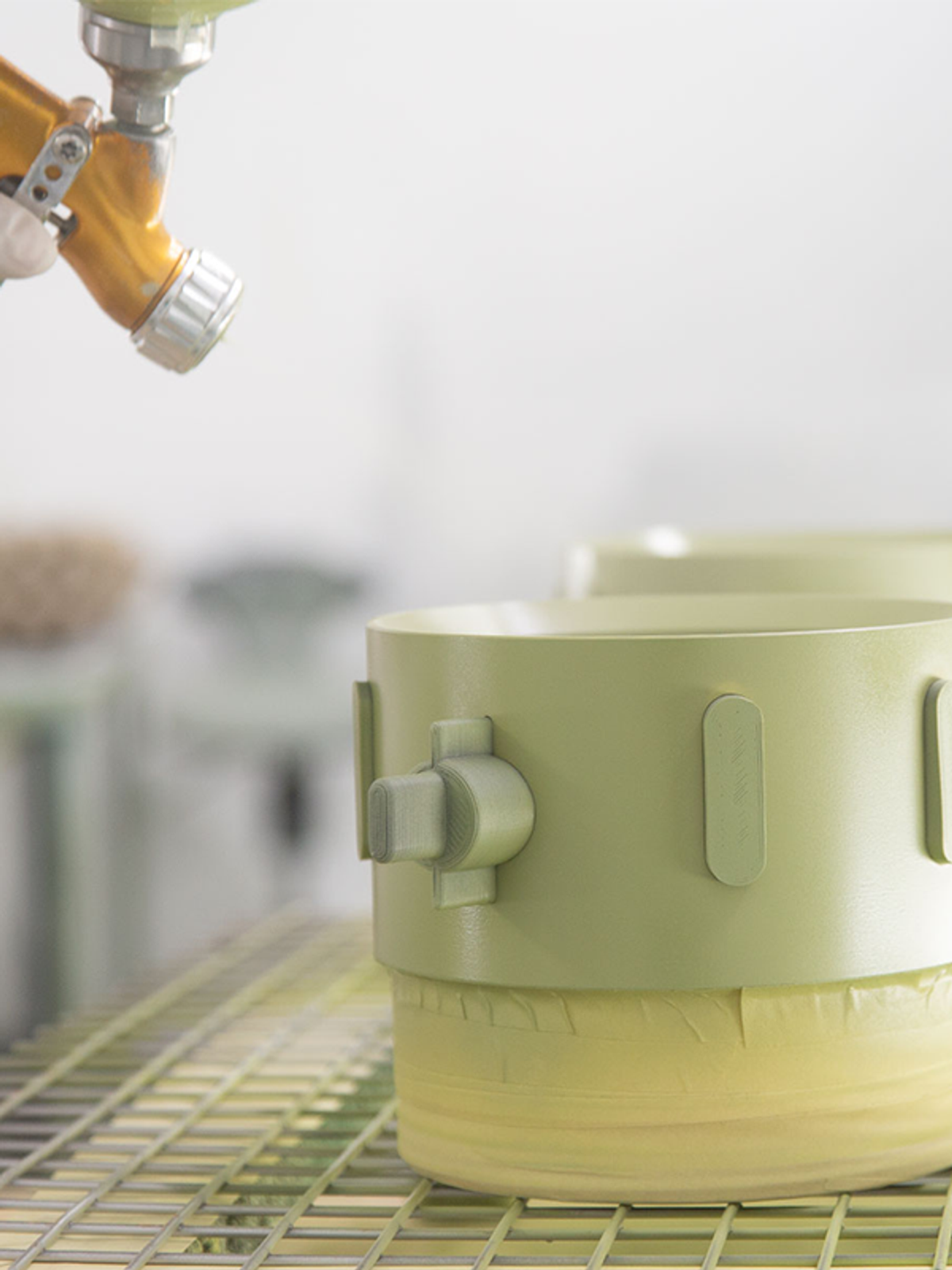
    PRINTING SILICONE MASKS AND SPARES FOR POWDER COATING

    Post-treatment is one of the final steps in the manufacturing process of a part. In industry, it consists of carrying out one or more operations to finalise the surface condition of a part: the objective is to improve the appearance or function of the surface to adapt it to the requirements of specific uses.

    Many of these operations are grouped in the “surface treatments” family. Industrial reconditioning companies or surface treatment specialists use these processes every day. Surface treatment processes are an important and advantageous step in the manufacturing cycle of a product for many sectors such as aeronautics, chemicals, energy, electronics and medical.

    Within these sectors, different categories of post-treatment can be distinguished. Mechanical, chemical, and thermal post-treatment, finishing (paint, varnish, etc.). In aeronautics a machined aluminum part may undergo the following treatments: degreasing > shot blasting > dye penetrant testing (non-destructive testing) > OAC – chromic anodic oxidation > primer > finishing.

    Pharyngolarynx printed by the S300X Pharyngolarynx printed by the S300X


    MANUFACTURING AND PRODUCTION
    3D PRINTING APPLICATIONS
    With faster prototyping, enhanced tooling, greater design freedom, and on-demand maintenance, 3D printing is transforming how we build, create, and evolve.
    BELLOWS FOR RACE CARS

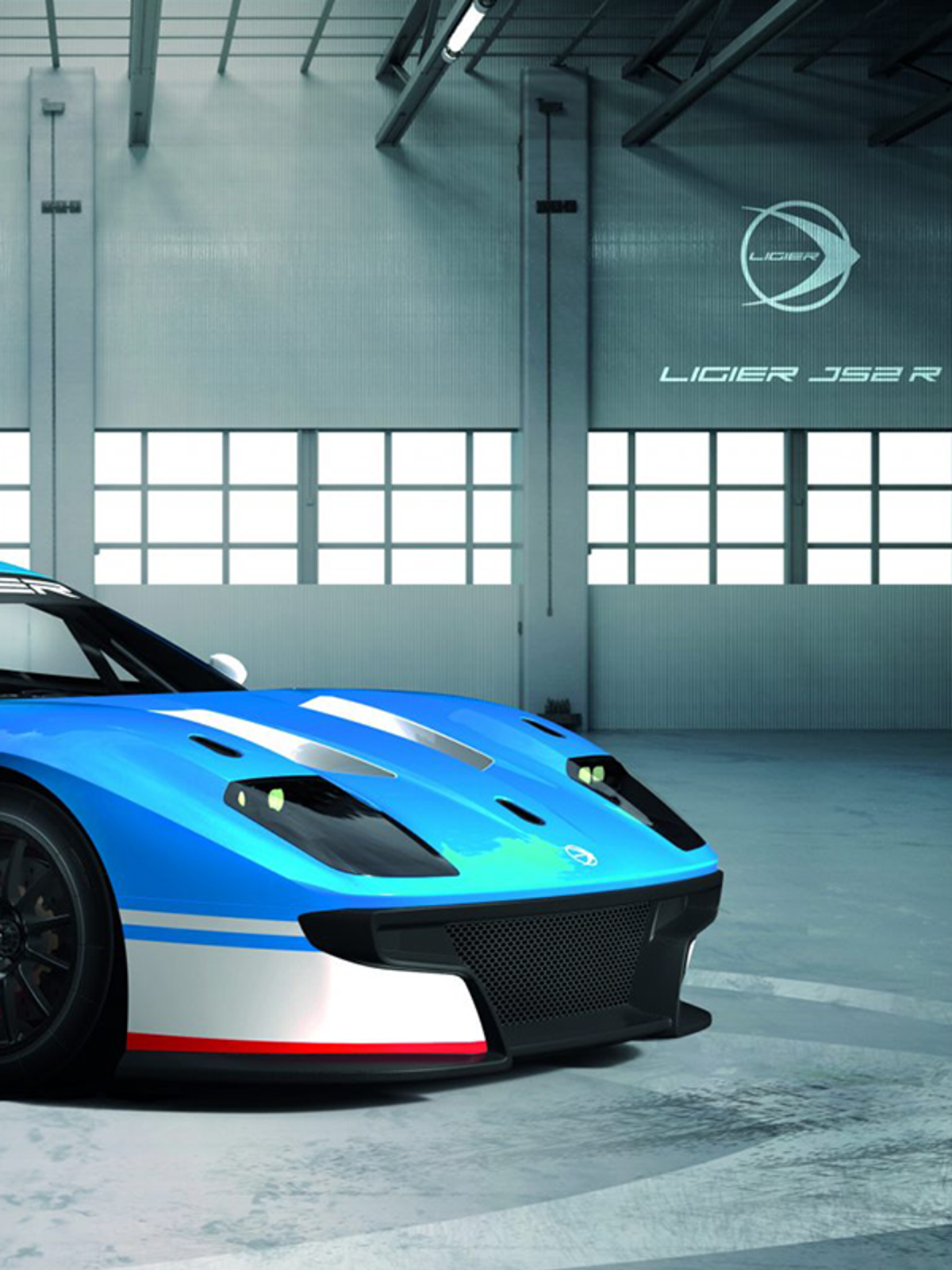
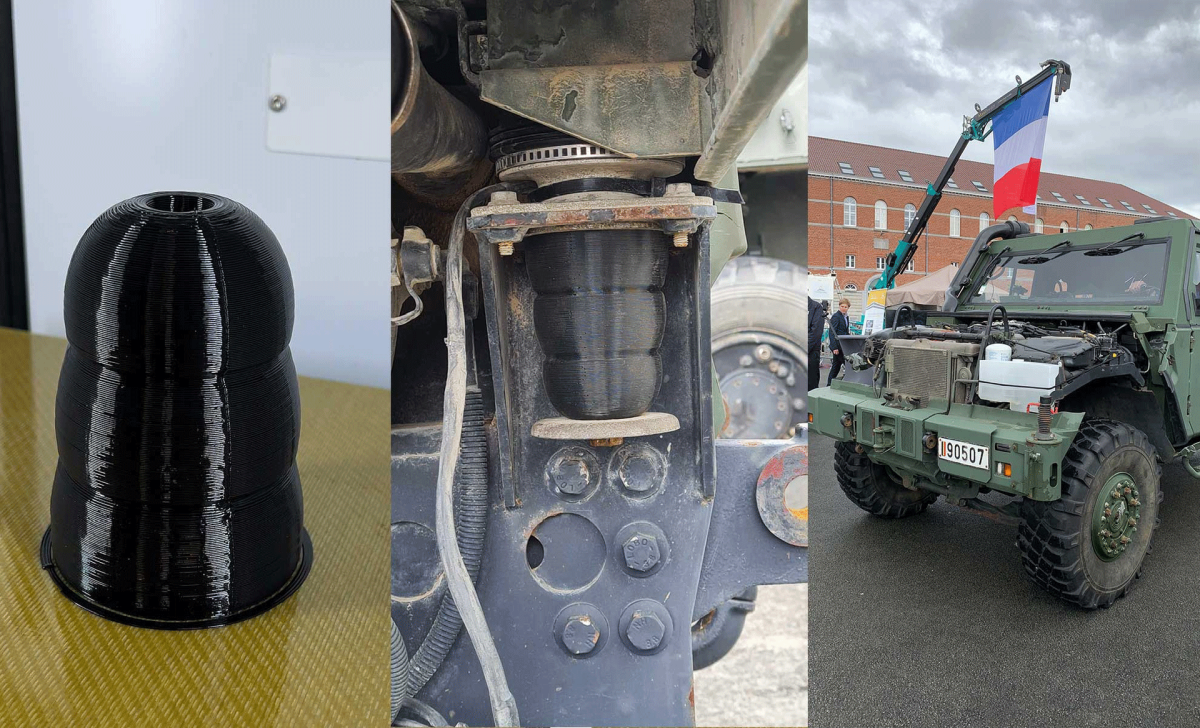
    Ligier Automotive used silicone 3D printing to prototype transmission bellows, avoiding costly molding for small production runs while testing performance under extreme conditions like high temperatures, speeds, and exposure to grease.

    An alternative to producing a molded part, which requires specific tools and is not cost-effective for single or very small series production. With a printing time of 3 hours 50 minutes per part, and rapid CAD design modifications (thickness), 2 business days are sufficient to finalise the part’s development.

    Tests were conducted on the manufacturer’s Ligier JS2 R development car. These initial tests were particularly positive as the bellows responded perfectly: resistance to temperature, behavior at high speed: no deformation, no grease ejection. The technology thus appears compatible with these significant technical constraints and could offer an interesting solution for prototyping and small series of bellows of all types.

    Pharyngolarynx printed by the S300X
    SEAL REPAIR FOR THE RAIL INDUSTRY

    Faced with a supply shortage, a railway company used Lynxter’s silicone 3D printing to rapidly produce a critical brake system seal, cutting lead time from weeks to days and showcasing the speed and flexibility of additive manufacturing in emergency situations.

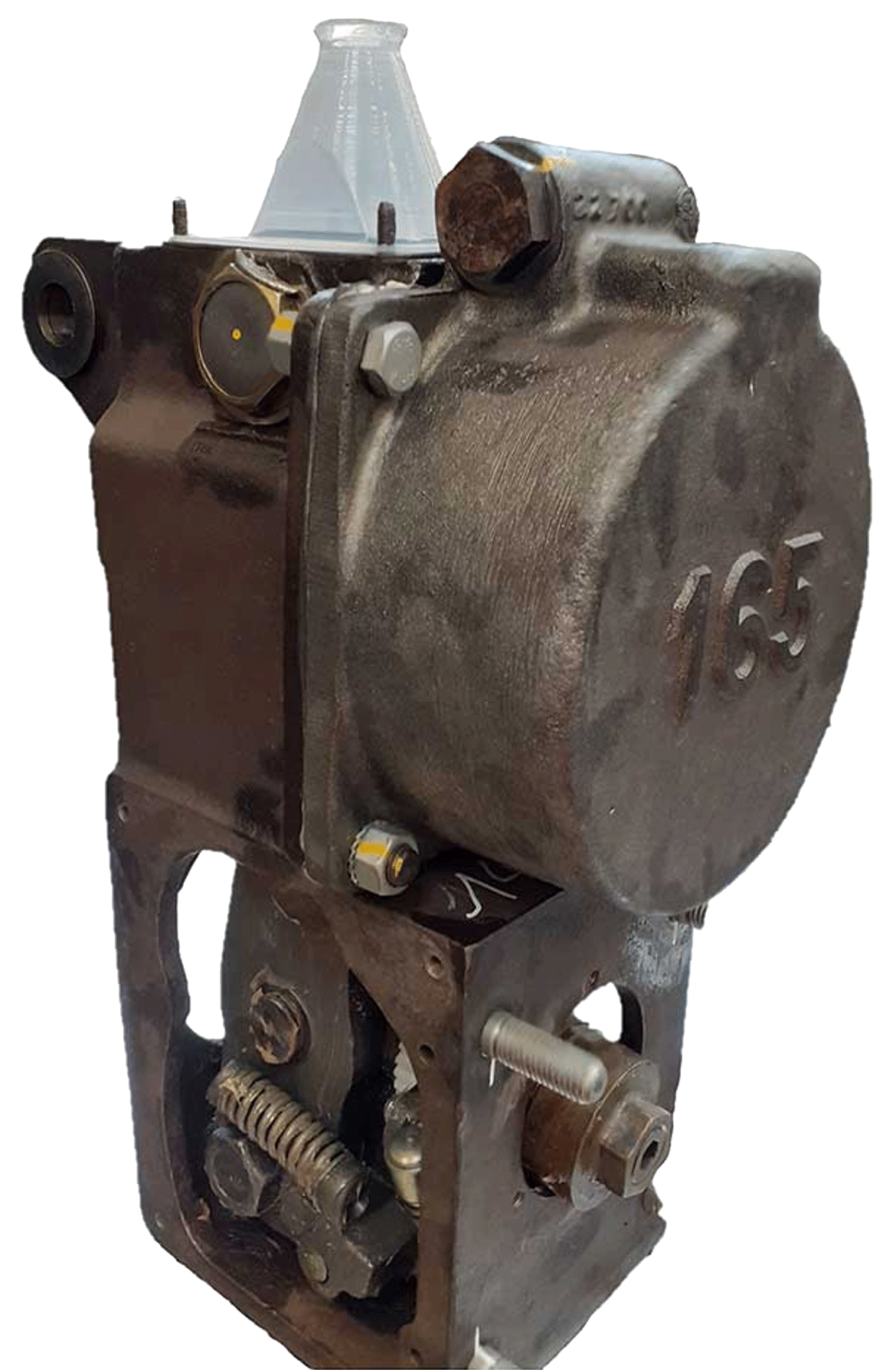
    The company needed to change a faulty part on one of its trains. However, this part is out of stock. The part is traditionally produced using injection molding and typically requires a manufacturing lead time of several months; a delay that the company could not anticipate due to the unforeseen nature of the incident. When this particular part is damaged or missing, the train may be immobilised, resulting in significant financial loss for the company.

    The deadlock situation was therefore resolved rapidly thanks to additive manufacturing along with a quick modification of the original CAD. This maintenance operation, that would have taken many weeks to resolve with the classic supply chain, was successfully dealt with in just days thanks to the S600D.

    Pharyngolarynx printed by the S300X


    MEET THE MACHINE THAT REWRITES THE RULES OF SILICONE PRINTING


    SKIP THE DRAMA

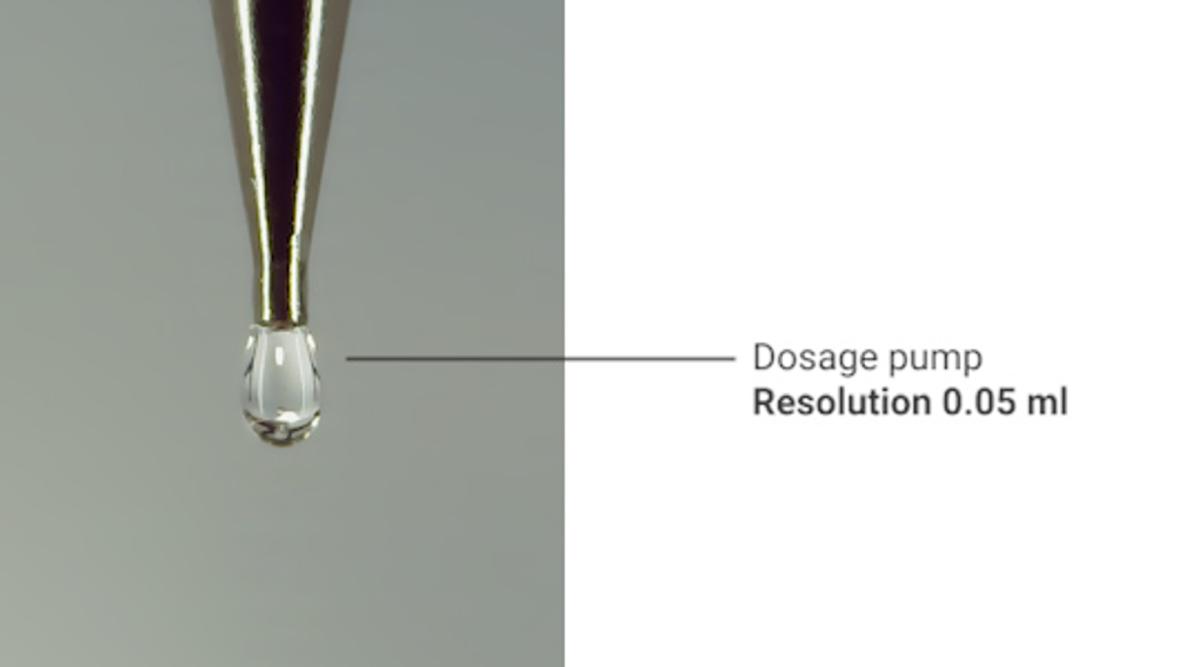
    Our high-precision volumetric dosage pump ensures very fine control of the flow with no pulsation, enabling the production of thin layers (50 μm) with repeatability and, consequently, enhanced reliability.

    Close-Up-Droplet
    TRY THE DIFFERENT APPROACH

    With IDEX liquid technology, we can now print silicone materials with water-soluble support, providing access to intricate shapes that were previously unattainable. This technology is exclusively available at Lynxter.

    Close-Up-3D-Silicone-Idex-S300X-Lynxter
    SAFE AND SOUND

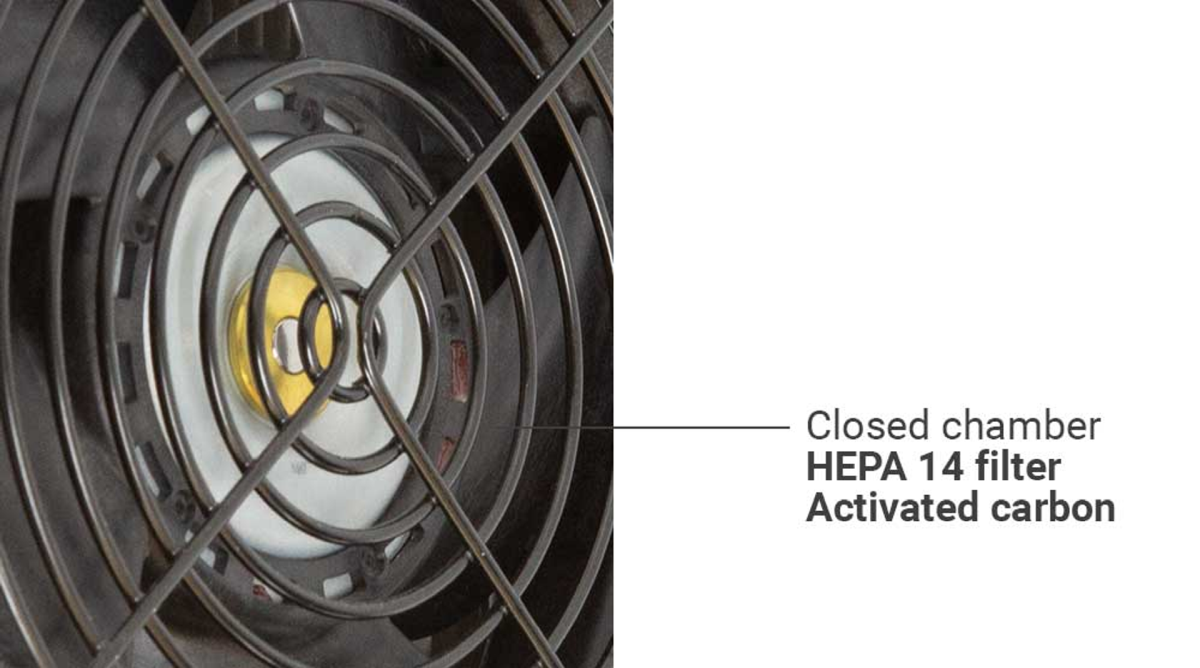
    The printer features a closed and secure chamber equipped with a HEPA 14 filter – Activated carbon and a locking system to ensure user safety.

    HEPA-14-filter-Activated-carbon
    NO FUSS

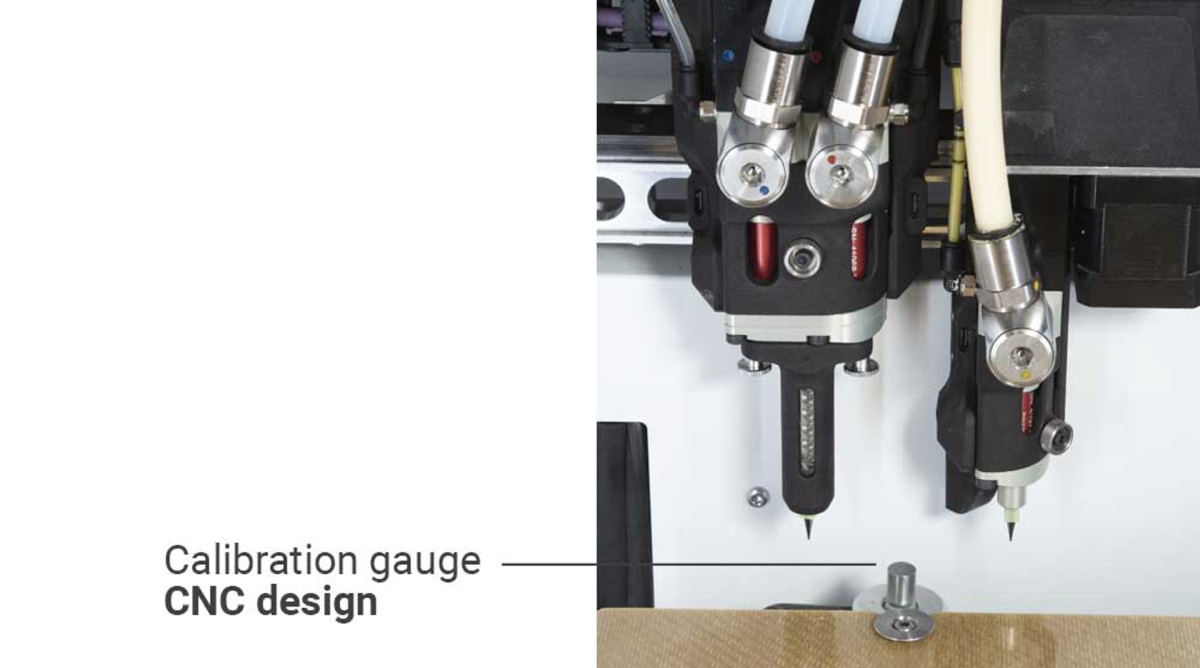
    Get the first layer right. Embrace precision and reliability with our surface and inter-nozzle calibrations which guarantee reliable and precise 3D printing results.

    S300X-Lynxter-CNC-Homing
    DREAM BIG

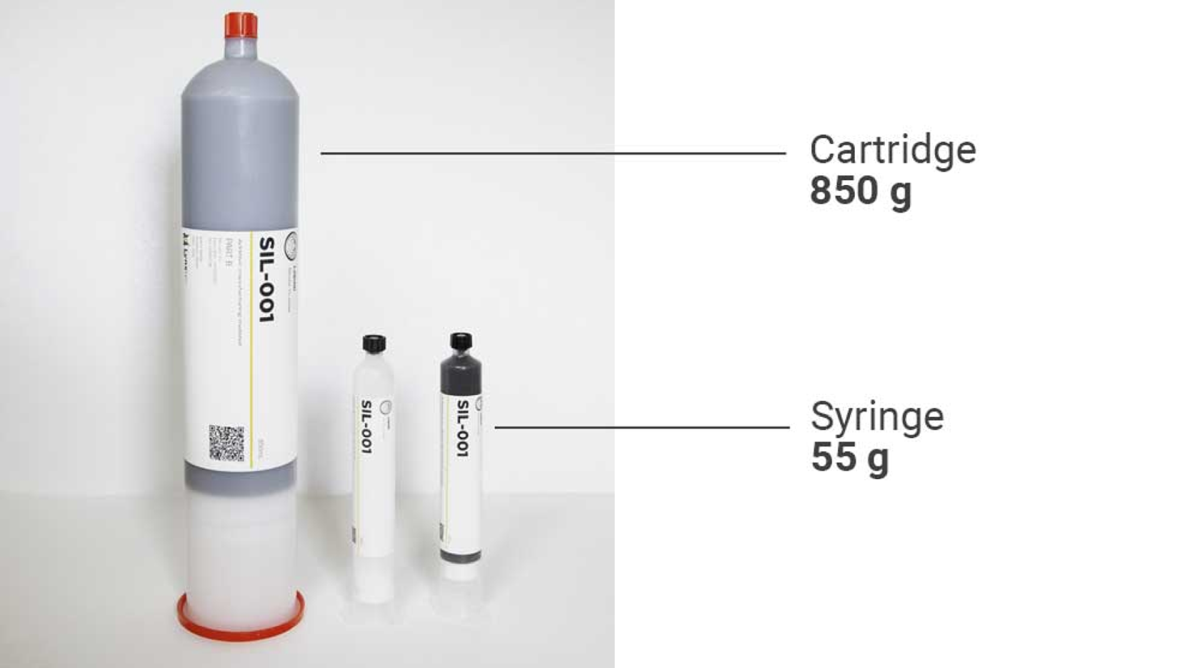
    Our small and large capacity cartridges for silicone and support materials enable the printing of long and voluminous parts.

    cartridge-850g-and-Syringe-55g
    DO YOUR THING

    Go ahead and do your thing. Our open software allows users to access printing parameters.


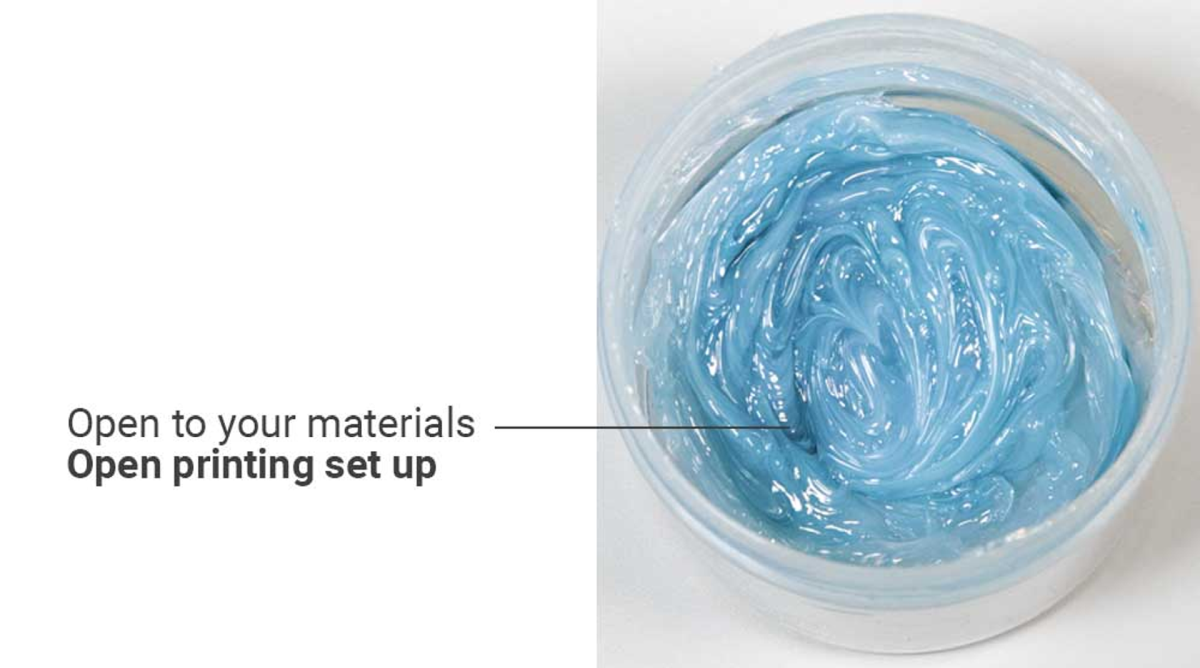
    Print your in-house materials and access a wide range of liquid materials.

    custom-material-mixes


    IDEX TECHNOLOGY, SUPPORT FOR SILICONE 3D PRINTING IN AN OPEN ECOSYSTEM


    Close-Up-3D-Silicone-Idex-S300X-Lynxter
    SILICONE EXPERTISE

    Since 2016, Lynxter has been developing unique and specialised expertise in silicone 3D printing, which is now integrated into the S300X – LIQ21 | LIQ11 printer ecosystem. The S300X – LIQ21 | LIQ11 prints industrial and medical-grade silicone that is UV-resistant and retains all of its chemical and mechanical properties.


    Notable materials include medical-grade RTV2 silicone (5, 10, 25, 40 ShA) certified for skin contact per ISO 10993-05, industrial-grade RTV2 silicone (45 and 70 ShA), and polyurethane (ranging from 50 to 85 ShA).

    INDUSTRIAL SILICONE 3D PRINTING

    The S300X – LIQ21 | LIQ11 combines robustness, precision and industrial efficiency in a compact size that fits in any workspace.


    The large capacity cartridges allow the silicone printing of large parts or several small ones in complete autonomy, reducing the need for intervention. Its filtered, heated and silent chamber ensures the safety and comfort of its user.

    Close-Up-3D-Silicone-Idex-S300X-Lynxter
    Close-Up-3D-Silicone-Idex-S300X-Lynxter
    OPTIMISE YOUR PRINTER

    Maximize productivity and protect your materials with dedicated LIQ21 pumps for the S300X - LIQ21 | LIQ11. Using separate pumps for silicone and polyurethane ensures perfect curing and eliminates any risk of contamination. You can even add multiple pumps for specific colours, saving valuable time by avoiding the need for frequent cleaning. More pumps, more efficiency, and flawless results every time.


    Introducing Silicone Polymer's Range of Medical Grade Materials
    (plus PST-2631 an Industrial option)


    Liquid Silicone Rubbers (LSR)
    SPECIFICATIONS
    DUROMETER (TYPE 00)

    40 (ASTM D2240)

    ELONGATION %

    1,135% (ASTM D412)

    TENSILE psi (MPa)

    285 psi (2.0 MPa) (ASTM D412)

    TEAR ppi (kN/m)

    55 ppi (9.7 kN/m) (ASTM D624)

    STRESS @ STRAIN psi (MPa) @ %

    15 (0.1) @ 300 %

    CURE RATE T90 m @ 138°C
    (90% cross-linking)

    1.20 (1′12″ min @ 138°C)

    CURE RATE SCORCH m @ 138°C
    (onset of vulcanisation)

    0.90 (0′54″ min @ 138°C)

    SPECIFIC GRAVITY

    1.10

    SPECIFICATIONS
    DUROMETER (TYPE A)

    5 (ASTM D2240)

    ELONGATION %

    1,100% (ASTM D412)

    TENSILE psi (MPa)

    600 psi (4.1 MPa) (ASTM D412)

    TEAR ppi (kN/m)

    80 ppi (14.1 kN/m) (ASTM D624)

    CURED

    Cured 30 min at 100°C (212°F)

    SPECIFIC GRAVITY

    1.08

    SPECIFICATIONS
    DUROMETER (TYPE A)

    7 (ASTM D2240)

    ELONGATION %

    1,000% (ASTM D412)

    TENSILE psi (MPa)

    350 psi (2.4 MPa) (ASTM D412)

    TEAR ppi (kN/m)

    70 ppi (12.3 kN/m) (ASTM D624)

    STRESS @ STRAIN psi (MPa) @ %

    40 (0.25) @ 200 %

    CURE RATE T90 m @ 138°C
    (90% cross-linking)

    1′12″ min @ 138°C

    CURE RATE SCORCH m @ 138°C
    (onset of vulcanisation)

    1′54″ (1.90 min @ 138°C)

    SPECIFIC GRAVITY

    1.08

    SPECIFICATIONS
    DUROMETER (TYPE A)

    10 (ASTM D2240)

    ELONGATION %

    1,000% (ASTM D412)

    TENSILE psi (MPa)

    450 psi (3.1 MPa) (ASTM D412)

    TEAR ppi (kN/m)

    65 ppi (11.5 kN/m) (ASTM D624)

    STRESS @ STRAIN psi (MPa) @ %

    45psi (0.31MPa) @ 200 %

    CURE RATE T90 m @ 138°C
    (90% cross-linking)

    1.95 minutes (1′57″ @ 138°C)

    CURE RATE SCORCH m @ 138°C
    (onset of vulcanisation)

    1.40 minutes (1′24″ @ 138°C)

    SPECIFIC GRAVITY

    1.07 (ASTM D792)

    SPECIFICATIONS
    DUROMETER (TYPE A)

    15 (ASTM D2240)

    ELONGATION %

    700% (ASTM D412)

    TENSILE psi (MPa)

    750 psi (5.2 MPa) (ASTM D412)

    TEAR ppi (kN/m)

    111 ppi (19.6 kN/m) (ASTM D624)

    STRESS @ STRAIN psi (MPa) @ %

    55 (0.4) @ 200 %

    CURED

    Stabilise for 3 hours at ambient temperature and humidity
    5′ @ 150°C (302°F)

    SPECIFIC GRAVITY

    1.11 (ASTM D792)

    SPECIFICATIONS
    DUROMETER (TYPE A)

    20 (ASTM D2240)

    ELONGATION %

    700% (ASTM D412)

    TENSILE psi (MPa)

    750 psi (5.17 MPa) (ASTM D412)

    TEAR ppi (kN/m)

    125 ppi (22.05 kN/m) (ASTM D624)

    STRESS @ STRAIN psi (MPa) @ %

    65 (0.45) @ 200 %

    CURE RATE T90 m @ 138°C
    (90% cross-linking)

    2.10 (2′6″ min @ 138°C)

    CURE RATE SCORCH m @ 138°C
    (onset of vulcanisation)

    1.50 (1′30″ min @ 138°C)

    SPECIFIC GRAVITY

    1.14 (ASTM D792)

    SPECIFICATIONS
    DUROMETER (TYPE A)

    30 (ASTM D2240)

    ELONGATION %

    450% (ASTM D412)

    TENSILE psi (MPa)

    800 psi (5.52 MPa) (ASTM D412)

    TEAR ppi (kN/m)

    140 ppi (24.69 kN/m) (ASTM D624)

    STRESS @ STRAIN psi (MPa) @ %

    175 (1.21) @ 200 %

    CURE RATE T90 m @ 138°C
    (90% cross-linking)

    2.15 (2′9″ min @ 138°C)

    CURE RATE SCORCH m @ 138°C
    (onset of vulcanisation)

    1.30 (1′18″ min @ 138°C)

    SPECIFIC GRAVITY

    1.13 (ASTM D792)

    SPECIFICATIONS
    DUROMETER (TYPE A)

    40 (ASTM D2240)

    ELONGATION %

    350% (ASTM D412)

    TENSILE psi (MPa)

    850 psi (5.86 MPa) (ASTM D412)

    TEAR ppi (kN/m)

    246 ppi (43.39 kN/m) (ASTM D624)

    STRESS @ STRAIN psi (MPa) @ %

    425 (2.93) @ 200 %

    CURE RATE T90 m @ 138°C
    (90% cross-linking)

    2.30 (2′18″ min @ 138°C)

    CURE RATE SCORCH m @ 138°C
    (onset of vulcanisation)

    1.50 (1′30″ min @ 138°C)

    SPECIFIC GRAVITY

    1.13 (ASTM D792)

    SPECIFICATIONS
    DUROMETER (TYPE A)

    50 (ASTM D2240)

    ELONGATION %

    400% (ASTM D412)

    TENSILE psi (MPa)

    1,000 psi (6.9 MPa) (ASTM D412)

    TEAR ppi (kN/m)

    243 ppi (42.86 kN/m) (ASTM D624)

    STRESS @ STRAIN psi (MPa) @ %

    400 (2.76) @ 200 %

    CURE RATE T90 m @ 138°C
    (90% cross-linking)

    2.35 (2′21″ min @ 138°C)

    CURE RATE SCORCH m @ 138°C
    (onset of vulcanisation)

    1.40 (1′24″ min @ 138°C)

    SPECIFIC GRAVITY

    1.14 (ASTM D792)

    SPECIFICATIONS
    DUROMETER (TYPE A)

    60 (ASTM D2240)

    ELONGATION %

    525% (ASTM D412)

    TENSILE psi (MPa)

    1,300 psi (8.97 MPa) (ASTM D412)

    TEAR ppi (kN/m)

    250 ppi (44.09 kN/m) (ASTM D624)

    STRESS @ STRAIN psi (MPa) @ %

    600 (4.14) @ 200 %

    CURE RATE T90 m @ 138°C
    (90% cross-linking)

    2.10 (2′6″ min @ 138°C)

    CURE RATE SCORCH m @ 138°C
    (onset of vulcanisation)

    1.05 (1′3″ min @ 138°C)

    SPECIFIC GRAVITY

    1.15 (ASTM D792)

    SPECIFICATIONS
    DUROMETER (TYPE A)

    70 (ASTM D2240)

    ELONGATION %

    465% (ASTM D412)

    TENSILE psi (MPa)

    1,325 psi (9.14 MPa) (ASTM D412)

    TEAR ppi (kN/m)

    240 ppi (42.33 kN/m) (ASTM D624)

    STRESS @ STRAIN psi (MPa) @ %

    825 (5.69) @ 200

    CURE RATE T90 m @ 138°C
    (90% cross-linking)

    2.20 (2′12″ min @ 138°C)

    CURE RATE SCORCH m @ 138°C
    (onset of vulcanisation)

    1′ min @ 138°C

    SPECIFIC GRAVITY

    1.22 (ASTM D792)

    SPECIFICATIONS
    DUROMETER (TYPE A)

    80 (ASTM D2240)

    ELONGATION %

    250% (ASTM D412)

    TENSILE psi (MPa)

    1,000 psi (6.9 MPa) (ASTM D412)

    TEAR ppi (kN/m)

    90 ppi (15.87 kN/m) (ASTM D624)

    STRESS @ STRAIN psi (MPa) @ %

    650 (4.48) @ 100 %

    CURE RATE T90 m @ 138°C
    (90% cross-linking)

    2.05 (2′3″ min @ 138°C)

    CURE RATE SCORCH m @ 138°C
    (onset of vulcanisation)

    0.95 (0′57″ min @ 138°C)

    SPECIFIC GRAVITY

    1.17 (ASTM D792)


    Adhesives
    SPECIFICATIONS
    DUROMETER (TYPE A)

    15 (ASTM D2240)

    ELONGATION %

    800% (ASTM D412 )

    TENSILE psi (MPa)

    1,000 psi (6.9 MPa) (ASTM D412)

    TEAR ppi (kN/m)

    130 ppi (23.0 kN/m) (ASTM D624)

    CURED

    Cured: 15 minutes at 150°C

    SPECIFIC GRAVITY

    1.12 (ASTM D792)

    SPECIFICATIONS
    DUROMETER (TYPE A)

    20 (ASTM D2240)

    ELONGATION %

    800% (ASTM D412)

    TENSILE psi (MPa)

    1,000 psi (6.9 MPa) (ASTM D412)

    TEAR ppi (kN/m)

    130 ppi (23.0 kN/m) (ASTM D624)

    CURED

    Cured: 24 hours at 25°C

    SPECIFIC GRAVITY

    1.12 (ASTM D792)


    Electrically Conductive
    SPECIFICATIONS
    DUROMETER (TYPE A)

    45 (ASTM D2240)

    ELONGATION %

    275%

    CURED

    Cured: 30 minutes at 150°C (302°F)

    SPECIFIC GRAVITY

    1.08 (ASTM D792)

    Electrically Conductivity

    Volume Resistivity: 70 ohm×cm

    SPECIFICATIONS
    DUROMETER (TYPE A)

    45

    ELONGATION %

    275%

    TENSILE psi (MPa)

    615 psi (4.24 MPa) (ASTM D412)

    TEAR ppi (kN/m)

    55 ppi (9.7 kN/m)

    CURED

    Cured: 30 minutes at 150°C (302°F)

    SPECIFIC GRAVITY

    1.08

    Electrically Conductivity

    Volume Resistivity: 70 ohm×cm

    HOW TO 3D PRINT SILICONE
    GET IT IN 90 SECONDS

    In just 90 seconds, you’ll finally get why 3D silicone printing isn’t just possible, it’s powerful! Discover the tech, the precision, and the breakthroughs that make it real.

     
    SPECIFICATIONS

    All the technical specifications of the Silicone 3D Printer S300X ‑ LIQ21 | LIQ11

    Toolhead Configuration

    LIQ21 : Two-part
    LIQ11 : One-part

    Printing Materials

    Medical RTV2 Silicone (5, 10, 25, 40 ShA)
    Industrial RTV2 Silicone (45 ShA)
    Polyurethane (50 to 85 ShA)
    LSR (70 ShA)

    Extrusion

    Single and Dual Independent Extrusion IDEX

    X,Y,Z Resolution

    X-Y: 12.5 μm, Z: 1.0 μm

    Dimensions

    W 1074 x L 727 x H 1010 mm

    Build Volume

    X 300 – Y 250 – Z 200 mm

    Thermal Environment

    Heated Build Plate: 20 °C to 80 °C
    Heated Enclosure: 20 °C to 40 °C

    Layer Height

    50 μm to 1 mm

    Build Surface

    Removable
    Hot-Swappable
    Machined Surface

    Maximum Tool Speed

    X-Y : 500 mm/s, Z: 40 mm/s

    Automatic Calibration

    Build Surface Leveling
    Machine Geometric Correction
    Tool Height Calibration
    Inter-nozzle Offset Calibration

    Control

    Stand-alone Touchscreen and Web Interface

    Connectivity

    Ethernet

    Manufacturing Format

    Standard Gcode

    User Health and Safety

    Double Filtration HEPA H14
    Activated Carbon
    Machine Access Locking

    Job Security

    Consumables Run-out Detection
    Printing Resumption after Power Loss

    Configurable Firmware

    Customisable Lynxter Firmware (based on RepRap firmware) – Simplify3D Software (slicer)

    Power Supply

    100/230V AC 8A 50-60 Hz